
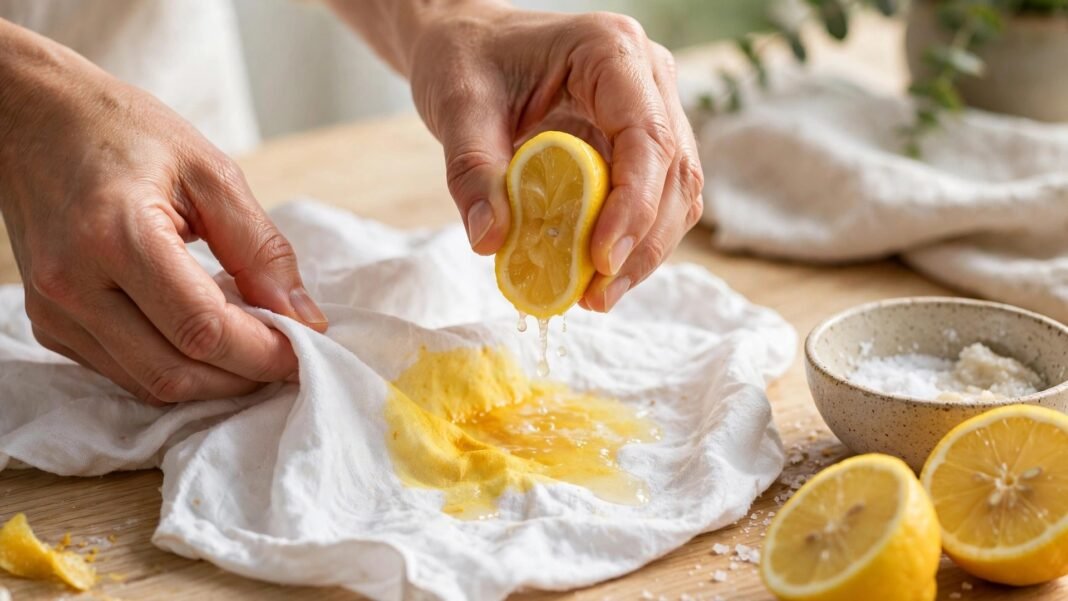
A splash of yellow haldi on a white kurta, shirt, or school uniform looks like a disaster, but a haldi stain on white clothes is one of the few Indian stains that genuinely gets easier once you understand it. The pigment in turmeric, curcumin, is sensitive to sunlight, and that gives you a free ally no other common stain offers.
What decides success is not an expensive product — it is the order in which you do things. Scrape and rinse cold first, treat the stain second, wash third, and use the sun last. Do those steps out of order, or make one of the two classic mistakes covered at the end, and a washable stain can become a permanent one.
Haldi Stain on White Clothes: Do These 3 Things First
First, lift off any excess. Scrape dried or wet turmeric paste gently with the edge of a spoon or a blunt knife. Do not rub the stain with a cloth or your fingers: rubbing spreads the pigment sideways and pushes it deeper into the weave, turning a small spot into a large pale one.
Second, rinse from the back of the fabric under cold running water, so the water pushes the pigment out the way it came in. Third, keep heat away from the garment until the stain is completely gone. That means no hot water, no ironing, and no tumble dryer — heat helps the pigment bind to the fibres, and a dried-in stain is far harder to shift.
Method 1: Sunlight — the Remedy Turmeric Cannot Resist
Curcumin breaks down under ultraviolet light, which is why a faded haldi mark is a familiar sight on clothes dried outdoors. Ariel India’s laundry guidance makes the same point from the other side: the sun acts as a natural bleaching agent and helps keep white clothes white. After washing (methods below), hang the still-damp garment in direct sunlight for a few hours.
Sunlight works best as a finishing step on a treated, washed stain, and on white cotton it can erase the last yellow shadow completely. It costs nothing and needs no product, so always give a haldi stain on white clothes one full sunny afternoon before reaching for anything stronger. Our curry stain removal guide uses the same sun-finishing trick for full curry splashes.
Method 2: Detergent Soak, Glycerine, or Dish Soap for Fresh Stains
For a fresh stain, start with detergent. Ariel India’s stain guide recommends applying washing powder or liquid to the stain, soaking the garment in cold water for about 30 minutes, and then washing as usual, repeating if a trace remains. This alone clears most same-day haldi marks on cotton.
If the stain came with a tadka or curry, it is riding on oil, and oil needs a grease-cutter. Rub a little liquid dish soap or glycerine (available at any chemist) into the stain, leave it for 20–30 minutes, then rinse cold and wash. Glycerine also softens a stain that has already dried, making it the best first move for yesterday’s kurta.
Method 3: A White Vinegar Soak for Stubborn Shadows
When a pale yellow shadow survives the first wash, soak the garment in a bucket of cold water with half a cup of white vinegar for about 30 minutes, then wash again. Vinegar is a long-standing home treatment for turmeric because the mild acid works on the pigment without the risks that come with bleach. For a haldi stain on white clothes, it is the safest next step after a first wash.
Use only plain white vinegar, not the coloured kind, and rinse the garment fully before the wash so vinegar and detergent are not fighting each other in the same water. After this wash, finish in direct sunlight as described above — the combination clears shadows that either step alone leaves behind.
Method 4: Oxygen Bleach for White Cotton That Still Shows a Mark
If the garment is white cotton and a mark still shows after washing, sunlight, and vinegar, an oxygen-based bleach is the strongest safe option. Unilever’s Get Set Clean laundry guide recommends exactly this for a stubborn remnant on white cotton: oxygen bleach can lift what detergent leaves behind. Follow the pack’s soaking instructions and check the care label first.
Oxygen bleach is colour-safe and far gentler than chlorine bleach, but it is not for every fabric. Keep it away from silk, wool, and embellished or delicate garments, where the detergent-and-sunlight routine, repeated patiently, is the safer route. When in doubt, test any product on a hidden seam first.
Adjust the Method to the Fabric
White cotton — kurtas, shirts, uniforms, bedsheets — can take the full routine: detergent soak, vinegar if needed, oxygen bleach for leftovers, and long direct sunlight. Cotton is where removing a haldi stain on white clothes is easiest, so do not give up after one wash.
Synthetics such as polyester and nylon blends hold the pigment more on the surface, so dish soap and a cool wash often finish the job quickly. Keep sun exposure moderate and skip very hot washes, which these fabrics dislike anyway. For mixed food stains with grease, our oil stain removal guide covers the degreasing steps in detail.
Delicates — silk, chiffon, wool, or anything embroidered — get the gentle version only: cold rinse, mild detergent worked in by hand, no bleach of any kind, and drying away from harsh midday sun. Ariel’s guidance for delicate and coloured clothes is the same: avoid bleach and strong direct sun, and follow the care label above everything else.
The 2 Mistakes That Can Set a Haldi Stain Forever
Mistake 1: Hot water. Heat is the fastest way to fix turmeric into fabric. Hot water, a hot iron over an untreated stain, or a tumble-dryer cycle can bond the pigment so firmly that later treatments only fade it. Until the stain is fully out, everything the garment touches — rinse, soak, wash — should be cold or cool.
Mistake 2: Chlorine bleach. This one surprises people, because bleach is the obvious reach for a white garment. But curcumin is a natural pH indicator — school science textbooks use it as the classic example — staying yellow in neutral or acidic conditions and turning red in alkaline ones, which is why a haldi stain famously turns red with alkaline soap. Chlorine bleach is strongly alkaline, so instead of lifting the yellow it can flip the stain pinkish-orange and set that colour in. Get Set Clean’s guide states it plainly: never use chlorine bleach on a fresh turmeric stain. On whites, oxygen bleach is the safe substitute.
Follow the order — cold first, treat, wash, sun — and respect the two mistakes, and almost every haldi stain on white clothes comes out at home. For the drink that so often accompanies the curry, see our guide to removing tea stains from white clothes as well.
Frequently Asked Questions
Why did my haldi stain turn pink or red when I washed it?
Because turmeric's pigment, curcumin, is a natural pH indicator. It stays yellow in neutral or acidic conditions and turns red or reddish-brown in alkaline ones — and soap solutions are alkaline. The colour change looks alarming but the stain can still be treated; continue with cold rinses, detergent, and sunlight.
Can I use bleach on a haldi stain on white clothes?
Not chlorine bleach. It is strongly alkaline, so it can turn the yellow stain pinkish-orange and set it. For white cotton, use an oxygen-based (colour-safe) bleach instead, following the pack instructions and the garment's care label. Keep all bleach away from silk and wool.
Does sunlight really remove turmeric stains?
Yes. Curcumin is photosensitive — ultraviolet light breaks the pigment down, which is why Ariel India describes the sun as a natural bleaching agent for whites. Sunlight works best after the garment has been treated and washed; hang it damp in direct sun for a few hours to clear the last shadow.
What should I do for a haldi stain on silk or another delicate fabric?
Use only the gentle routine: scrape off excess, rinse from the back with cold water, work in a mild detergent by hand, and wash cool. Skip vinegar soaks, oxygen bleach, and chlorine bleach entirely, and dry the garment away from harsh midday sun.
Will hot water help remove a haldi stain faster?
No — hot water is one of the two mistakes that set this stain. Heat helps the pigment bind into the fibres, and ironing or tumble-drying a stained garment does the same. Keep every rinse, soak, and wash cold until the stain has completely disappeared.