
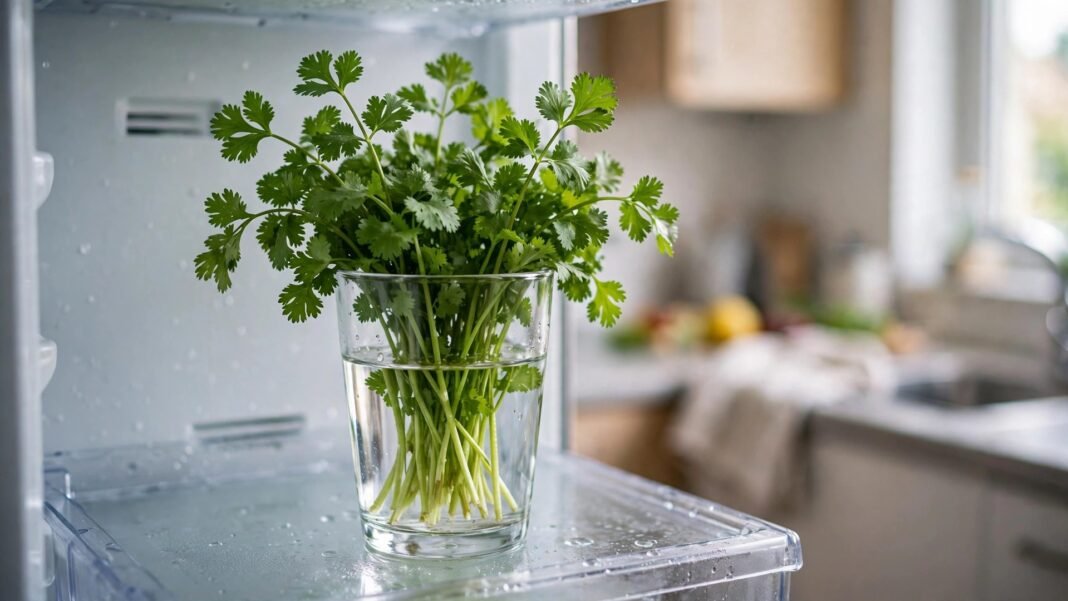
Learning how to keep coriander leaves fresh longer in the fridge is one of those small kitchen skills that quietly saves hundreds of rupees a year. A Rs. 20 bunch of dhania usually turns into a slimy, blackened mess within 3–4 days in an Indian fridge — not because coriander is fragile, but because most of us store it wrong. Coriander wilts for three reasons: moisture trapped around the leaves breeds rot, ethylene gas from nearby fruits speeds up yellowing, and crushed stems leak and decay. Fix those three things and the same bunch stays green and fragrant for up to 3 weeks.
This guide explains the science in plain language and gives you the exact methods, step by step.
Why Coriander Goes Bad So Fast (and What Actually Preserves It)
Fresh coriander is about 90% water, with thin delicate leaves and hollow stems that bruise easily. Once picked, the leaves keep respiring — breathing out moisture and taking in oxygen — and any water sitting on the leaf surface becomes a breeding ground for the bacteria and fungi that cause slime and black spots. The refrigerator helps by slowing respiration, but a standard Indian fridge is also humid, and a coriander bunch sealed in its plastic bag traps condensation against the leaves — the worst of both worlds.
The preservation strategy is therefore simple: keep the leaves dry but the stems hydrated, allow a little air circulation, and keep the bunch away from ethylene-producing fruits like bananas, apples, and tomatoes, which accelerate yellowing. Every method below is just a different way of achieving those three conditions. The damp-paper-towel method described next is the most reliable for hitting the full 3-week mark.
Method 1: The Damp Paper Towel Roll (Lasts 2–3 Weeks)
This is the method professional kitchens use, and it is the one worth learning first. To keep coriander leaves fresh longer, start by sorting the bunch: discard any yellowed, slimy, or crushed leaves and stems, because one rotting leaf spreads decay to the rest. Do not wash the coriander yet — you will wash it just before use. Shake off any loose soil. Take 2–3 sheets of kitchen paper towel, dampen them lightly under the tap, and wring them out thoroughly — they should feel barely moist, not wet. Spread the coriander on the towels, roll everything into a loose cylinder, and slide the roll into a zip-lock bag or airtight container.
Leave the bag slightly open or poke a couple of tiny holes for air circulation, then place it in the vegetable crisper of your fridge, ideally away from fruits like apples and bananas that release ethylene gas. Check once a week: replace the paper towel if it feels soggy, and pick out any leaf that has turned. Stored this way, coriander routinely stays fresh for 2–3 weeks, with the flavour intact. The paper towel absorbs the condensation that would otherwise sit on the leaves, while the slight dampness keeps the stems from drying out — it balances the exact moisture equation coriander needs.
Method 2: The Water Glass Method (Lasts 2+ Weeks)
Treat coriander like a bouquet of flowers. Trim about 1 cm off the stem ends at an angle, stand the bunch upright in a glass or steel tumbler with 3–4 cm of fresh water covering the stem ends, and loosely cover the leafy tops with a plastic bag or cling film to create a mini greenhouse. Store the whole glass in the fridge door or a stable shelf. Change the water every 2–3 days and re-trim the stems if the ends look slimy.
This method keeps the stems continuously hydrated while the bag protects the leaves from the fridge’s drying air, and bunches commonly last 2 weeks or more — a reliable way to keep coriander leaves fresh longer. It takes up a little vertical space, so it suits fridges with a tall door shelf. One caution: if the leaves touch the wet plastic bag directly for days, those contact points can rot — keep the bag loose and tented, not tight.
More Ways to Keep Coriander Leaves Fresh Longer (and What Not to Do)
- Airtight container with a dry paper towel base: line a steel or plastic dabba with a dry paper towel, lay unwashed sorted coriander inside, cover with another towel, and seal. Lasts 10–14 days. Simpler than rolling, slightly less effective for the full 3 weeks.
- Freeze it for cooked dishes: if the bunch is already starting to wilt, chop it, pack it into an ice-cube tray with a teaspoon of water or oil per cube, and freeze. Frozen coriander loses its fresh-salad texture but is perfect for tadka, dals, and curries for up to 3 months. This is the zero-waste backup plan.
- Make coriander chutney or pesto: a bunch on the edge becomes green chutney (coriander, mint, green chilli, lemon) that keeps a week refrigerated, or a coriander-mint pesto under a layer of oil that keeps two weeks. Processing is preservation.
- Do not store it in the original plastic bag tied shut: this is the fastest route to slime, usually within 2–3 days, because condensation pools against the leaves.
- Do not wash before storing: washing adds surface moisture that accelerates rot. Always wash just before use, in cold water, and spin or pat dry.
- Do not store near bananas, apples, or tomatoes: these release ethylene gas that yellows coriander rapidly. Keep herbs in the crisper, fruits on a separate shelf.
- Do not crush the bunch: stuffing coriander tightly into a small container bruises stems, and bruised tissue rots first. Give it room.
- Steel dabba beats plastic for odour: a stainless steel container does not absorb the coriander smell the way plastic does, so your dabba stays fresh for the next batch too.
How to Revive Wilted Coriander in 15 Minutes
Found a limp, sad-looking bunch that is not yet slimy or black? Do not throw it away — coriander revives remarkably well with an ice-water shock. Fill a large bowl with cold water and a handful of ice cubes, submerge the entire bunch for 10–15 minutes, then lift it out and shake off the excess water. The cold water rehydrates the cells and restores turgor pressure — the internal water pressure that keeps leaves crisp — and most bunches perk up visibly within minutes.
After reviving, spin or pat the leaves dry and store using the damp-paper-towel method above. This rescue works once; a bunch that has been revived will not survive a second wilting, so use it within 2–3 days. And know the point of no return: if the stems are slimy, the leaves have black spots, or the bunch smells sour, no amount of ice water saves it — compost it and start fresh. Catching wilt early is the skill that helps you keep coriander leaves fresh longer; the paper-towel method exists precisely so you rarely need the rescue.
Fresh herbs are a small but real line item in the monthly grocery budget for a family of 4 — a household that throws away one Rs. 20 bunch a week wastes over Rs. 1,000 a year on coriander alone. The paper-towel method takes five minutes once, and it pays for itself within the month.
Sources: the storage principles that keep coriander leaves fresh longer are consistent with USDA and university extension guidance on fresh herb handling (moisture control, ethylene sensitivity, refrigeration); method details from standard professional kitchen practice.
Frequently Asked Questions
Should I wash coriander before storing?
No. Wash just before use. Washing before storing adds surface moisture that accelerates rot and turns the bunch slimy.
Why does coriander turn black in the fridge?
Trapped condensation in sealed plastic bags breeds bacteria and fungi. Ethylene gas from nearby fruits like bananas and apples also speeds up yellowing.
Can you freeze fresh coriander?
Yes. Chop it, freeze in ice-cube trays with water or oil, and use within 3 months for tadka, dals and curries. Frozen coriander is not suitable for fresh garnish.
How do you revive wilted coriander?
Submerge the bunch in ice water for 10-15 minutes to restore crispness, then pat dry and store properly. Use revived coriander within 2-3 days.