
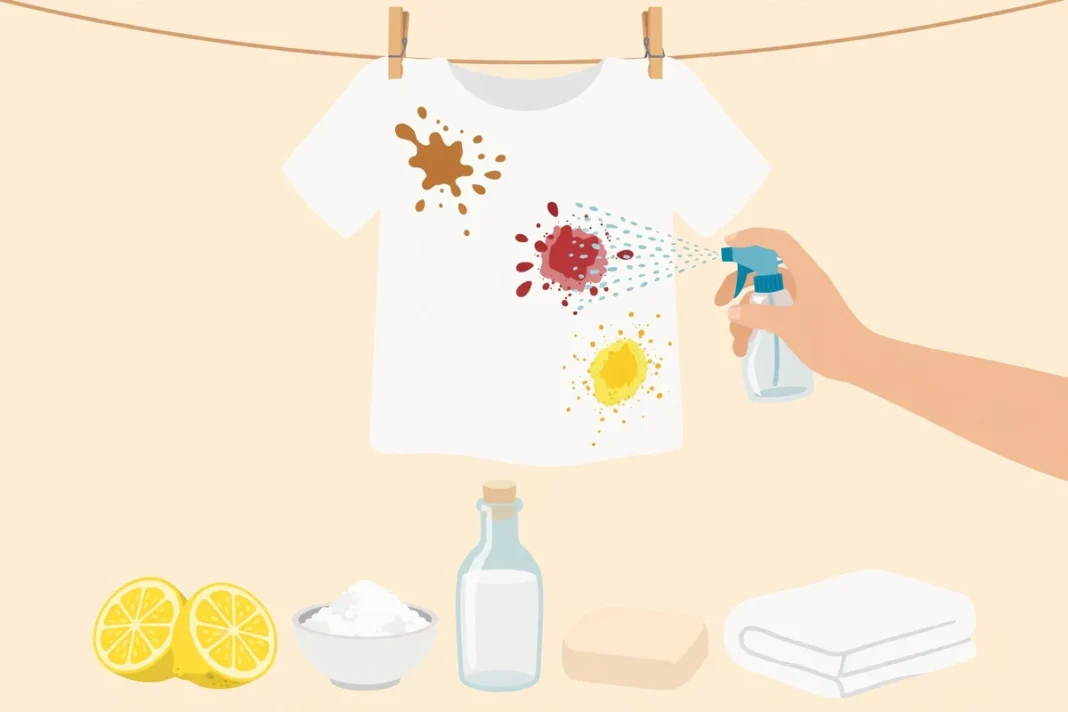
A stain on a favourite shirt feels like a small disaster, but most stains come out completely if you treat the right stain the right way. This guide explains how to remove stains from clothes step by step, whether the mark is fresh turmeric on a kurta, dried coffee on an office shirt, or a yellow sweat patch on white cotton. You do not need expensive products — a few kitchen staples and the right order of steps do most of the work.
Below you will find the five rules that work on almost every stain, a quick way to identify what kind of stain you are dealing with, and a separate section for each of the nine most common stains, with a link to a full step-by-step guide for each one. Follow the rules first, then jump to your stain. If you treat a stain the wrong way — hot water on blood, or soap on turmeric — you can set it permanently, so the order matters as much as the method.
How to Remove Stains from Clothes: First, Identify the Stain
Stains fall into a few families, and the family decides the treatment. Tannin stains come from tea, coffee and red wine. Protein stains come from blood, sweat, milk and egg. Oil stains come from cooking oil, butter, grease and curry. Dye stains come from turmeric and other strong pigments. Ink is its own family, because ballpoint, gel and marker inks all behave differently. If you know the family, you already know half the answer.
When you are not sure what made the stain, start with the safest move: blot it with a clean cloth, rinse with cold water, and test your cleaner on a hidden spot such as an inside seam. Cold water is the safe default for almost everything except grease, where hot water helps only after dish soap has lifted the oil. Never guess with bleach — it can strip colour and damage wool and silk beyond repair.
The 5 Rules That Work on Almost Every Stain
These five rules are the foundation of how to remove stains from clothes of any kind. Learn them once and they cover almost every spill you will ever meet, from a fresh splash to a dried mark you only noticed days later.
1. Act Fast, but Do Not Panic
A fresh stain is always easier than a dried one, because the pigment or oil has not bonded with the fibres yet. Blot the spill within a minute if you can, and start treatment the same day. But speed does not mean rushing with the wrong product — a panicked scrub with hot water can set a stain that a calm cold rinse would have removed. The American Cleaning Institute gives the same first advice in its Stain Removal Guide: deal with it as early as possible, pre-treat, then launder according to the fabric care label.
2. Blot, Never Rub
Press a clean cloth or paper towel onto the stain and lift — do not rub in circles. Rubbing pushes the stain deeper into the fibres and spreads it wider, and on delicate fabrics it can damage the weave. Work from the outside edge towards the centre so the stain does not grow, and change to a clean part of the cloth as it picks up colour.
3. Cold Water First — Except for Grease
Cold water is the default for tannin stains (tea, coffee, wine) and protein stains (blood, sweat, milk), because heat cooks protein into the fibres and sets the stain. Grease is the exception: after dish soap has lifted the oil, a hot rinse helps wash it away — but only if the care label allows hot water. When in doubt, use cold.
4. Test on a Hidden Spot
Every cleaner, from vinegar to hydrogen peroxide, can change a fabric’s colour. Before you treat the visible stain, dab a little of the solution on an inside seam or hem, wait a few minutes, and check for colour change or damage. This one test has saved more clothes than any single stain remover. It matters most on coloured clothes, silk and wool.
5. Never Put a Stained Garment in the Dryer
Heat from a dryer sets almost any stain permanently. After washing, check the stain before drying — if any mark remains, treat it again and wash again. The same warning applies to ironing: never iron over a stain. A stain that survives the dryer is far harder to remove, and often impossible.
Turmeric (Haldi) Stains — the Dye That Fights Back
Turmeric is the toughest common stain in Indian homes because its yellow pigment, curcumin, is a natural dye that has coloured cloth for thousands of years. It does not just sit on the fabric — it bonds with it. Fresh turmeric paste and dried powder behave differently, so the treatment starts by knowing which one you have. The good news is that curcumin has one weakness: sunlight breaks it down, and a few hours in direct sun can fade a mark that detergent could not touch.
Two warnings before you start. First, soap and other alkaline cleaners can turn a turmeric stain red or pink — if the mark changes colour after washing, it is a chemical reaction, not a worse stain, and sunlight is still the fix. Second, hot water does not help turmeric and can set it, so keep the water cold. Our full guide to remove turmeric stains from clothes covers all seven methods, including the difference between fresh and dried stains, and a separate guide handles haldi stains on white clothes.
Curry and Oil-Based Food Stains
A curry stain is two stains in one: turmeric pigment plus cooking oil. The oil carries the pigment deep into the fibres, and once the stain dries — oxidised in air or baked by sunlight on a clothesline — ordinary detergent cannot touch it. Dried curry stains need a pre-treatment before washing, not a stronger wash. Dish soap lifts the oil first, and then the turmeric can be dealt with like any haldi stain, including a spell in the sun.
The mistake most people make is washing a curry stain normally and hoping for the best, then drying the garment with the stain still in it. Treat first, wash second, and check before drying. Our guide to remove curry stains from clothes walks through four pre-treatments for dried and old stains, plus how the method changes for white and coloured fabrics.
Tea Stains
Tea is a tannin stain, the same family as coffee and red wine, and the brown ring it leaves on a white kurta or school uniform is easy to see and stubborn to shift. The tannin binds to the fibres, and milk tea (chai) adds a protein element that complicates things further. A white vinegar soak loosens the tannin, a baking soda paste lifts dried marks, and lemon juice followed by sunlight works well on white clothes — the sun does the final fading.
Because white fabric allows stronger treatments, our tea guide focuses on white and light-coloured clothes only, where you can safely use the full set of remedies. If the stain is on a coloured shirt, use the gentler vinegar method and test a hidden spot first. The full guide to remove tea stains from white clothes covers fresh spills, old set-in rings and milk-tea stains.
Coffee Stains
Coffee stains look permanent because coffee is a tannin stain, but they are one of the easiest to beat if you act before heat sets them. Blot first, never rub, then rinse with cold water. Liquid dish soap breaks up the coffee oils, a white vinegar and dish soap soak handles deeper marks, and a baking soda paste works on dried stains. On white cotton only, hydrogen peroxide can lift the last shadow — never use it on colours.
Old coffee stains that have already been washed and dried need a longer approach: a milk soak softens the set tannin before a normal wash. And remember the golden rule — never put the garment in a hot dryer until the stain is gone, or the heat will lock it in. Our guide to remove coffee stains from clothes gives all seven methods in order.
Red Wine Stains
Red wine is a tannin stain with a strong red pigment, and the first minute decides whether it washes out easily or becomes a project. Blot the spill immediately, cover it with salt or baking soda to absorb the wine, and do not rub — rubbing pushes the wine deeper and spreads it wider. Then flush with cold water from the back of the fabric, so the wine is pushed out rather than deeper in.
For the remaining mark, a dish soap and hydrogen peroxide mix works on white clothes, while a white vinegar and dish soap soak suits colours. Soda water or even a splash of white wine can dilute the pigment in a pinch, and sturdy white cotton can take a boiling water pour. Our guide to remove red wine stains from clothes covers all seven fast methods.
Blood Stains — Cold Water Only
Blood is a protein stain, and heat is its best friend — which is why the first rule is always cold water. Hot water cooks the protein into the fibres and turns a small stain into a permanent brown mark. Rinse fresh blood under cold running water, then soak in cold salt water. Dish soap and cold water handle most fresh stains on everyday clothes.
Dried blood needs more patience: a baking soda paste on cotton and denim, a white vinegar soak on washable cotton, or an enzyme detergent soak for old, set-in stains. Hydrogen peroxide at 3% works on white cotton only. Silk and other delicates need a gentle cold-water method with no rubbing. Our guide to remove blood stains from clothes covers all seven methods, including what to do if the stain survived the dryer.
Grease and Cooking Oil Stains
Grease feels like a disaster on a favourite shirt, but most oil stains come out completely if you lift the oil before it sets. Blot the excess, then apply liquid dish soap — it is designed to cut grease. Baking soda or cornstarch sprinkled on the spot absorbs oil, and cornstarch is the gentler choice for delicate fabrics. After the soap has worked, rinse with hot water if the care label allows it — grease is the one stain where heat helps, but only after the oil is lifted.
For set-in grease, a dish soap and baking soda paste left to sit before washing works well, and a warm soak in laundry detergent handles the rest. Wash, check, and repeat — never tumble-dry first. Our guide to remove grease stains from clothes covers all seven methods, and if the stain came from plain cooking oil, our oil stain guide is the companion read.
Sweat Stains and Yellow Underarm Marks
Yellow underarm marks are not really sweat alone — they form when sweat reacts with the aluminium in antiperspirants and with body oils, and the yellow builds up over many washes. The good news is that most sweat stains respond well to simple home remedies if you treat them before washing. A baking soda paste works on fresh marks, a white vinegar soak loosens older ones, and lemon juice followed by sunlight is the classic fix for white clothes.
Set-in yellow needs a stronger step: an oxygen bleach soak, which is safe for most fabrics, or hydrogen peroxide on white cotton only. A dish soap and baking soda mix handles tough marks that resist a single remedy. Prevention helps too — letting antiperspirant dry before dressing and washing whites promptly keeps the yellow from building up. Our guide to remove sweat stains from clothes covers all seven methods.
Ink Stains — Know the Pen First
Ink is the only stain where the first step is detective work: what kind of pen made it? Ballpoint ink dissolves in alcohol, so rubbing alcohol or an alcohol-based hand sanitiser lifts it. Gel ink is water-based and responds to a white vinegar and dish soap mix. Permanent marker is designed not to come out at all, and only a last-resort solvent such as nail polish remover stands a chance — with a real risk of damaging the fabric.
Whatever the ink, blot — never rub — and put a clean cloth underneath the stain so the ink does not transfer to the other side of the garment. Dried ink benefits from a milk soak before treatment. Our guide to remove ink stains from clothes covers ballpoint, gel and marker inks separately, so you can match the method to the pen.
Stains by Fabric: Cotton, Whites, Colours and Delicates
Cotton is the most forgiving fabric — it takes hot water, oxygen bleach and most home remedies. White cotton is the easiest of all, because hydrogen peroxide and oxygen bleach are safe on it, and sunlight is a free fading agent. Coloured cotton needs more care: test every cleaner on a hidden spot, skip chlorine bleach entirely, and stick to dish soap, vinegar and baking soda.
Silk and wool are protein fibres, so treat them like blood stains: cold water only, gentle handling, and no harsh chemicals. Never use chlorine bleach on wool, silk or spandex — it can yellow or dissolve the fibres permanently. Denim is sturdy and takes most treatments, but wash it inside out and avoid strong bleach on dark denim. The American Cleaning Institute’s Laundry Basics guide is a good reference for fabric care symbols and for testing any stain remover for colourfastness on an inconspicuous area first.
What NOT to Do With Stains
Most ruined clothes are ruined by the treatment, not the stain — and knowing how to remove stains from clothes safely means knowing what to avoid as much as what to do. Never use hot water on blood, sweat, milk or egg — heat sets protein stains. Never use chlorine bleach on coloured clothes, wool, silk or spandex. Never put a stained garment in the dryer or iron over a stain. Never rub a stain — always blot. And never apply soap to a turmeric stain without knowing it can turn red or pink; the colour change is a chemical reaction, and sunlight, not more soap, is the fix.
Two more traps: do not mix cleaners, especially bleach with vinegar or ammonia, which can release harmful fumes. And do not assume that a stronger product is a better one — a paste of baking soda and water, given time to sit, often beats a harsh chemical applied in a hurry. When a stain resists two full rounds of treatment, a professional cleaner is cheaper than a ruined garment.
Your Stain-Removal Kit: 7 Things to Keep at Home
You do not need a shelf of specialist products to learn how to remove stains from clothes — seven cheap items cover almost every stain in this guide: liquid dish soap, baking soda, white vinegar, hydrogen peroxide at 3%, oxygen bleach, table salt, and lemons. Add clean white cloths for blotting, an old soft toothbrush for working paste into fibres, and a small bowl for mixing pastes. Keep them together in one place, so you can start treating a stain within a minute instead of hunting through cupboards.
Learning how to remove stains from clothes is mostly about knowing which family a stain belongs to and following the right order: blot, identify, test, treat, wash, and check before drying. The nine guides linked above cover each stain in full detail, so bookmark this page and jump to the one you need when the next spill happens. Most stains are not emergencies — they are small problems with known solutions, and the sooner you start, the easier they are to fix.
Frequently Asked Questions
Does hot water help remove stains?
It depends on the stain. Hot water helps grease stains after dish soap has lifted the oil, but it sets protein stains such as blood, sweat, milk and egg permanently. When you are unsure, use cold water — it is the safe default for almost every stain.
Can sunlight really remove stains?
Yes, for turmeric and sweat stains on white clothes. Sunlight breaks down curcumin, the yellow pigment in turmeric, and helps fade yellow underarm marks after a lemon juice treatment. It works best on white cotton left in direct sun for a few hours.
Why did my turmeric stain turn red after washing?
Soap and other alkaline cleaners react with curcumin and turn it red or pink. It is a chemical reaction, not a worse stain — and sunlight is still the fix. Keep turmeric stains away from soap until the sun has faded them.
When should I take a stained garment to a professional cleaner?
When the fabric is silk, wool or labelled dry-clean only, when the stain has survived two full rounds of home treatment, or when the garment is expensive and the risk of damage is high. Tell the cleaner what made the stain — the right treatment depends on it.