
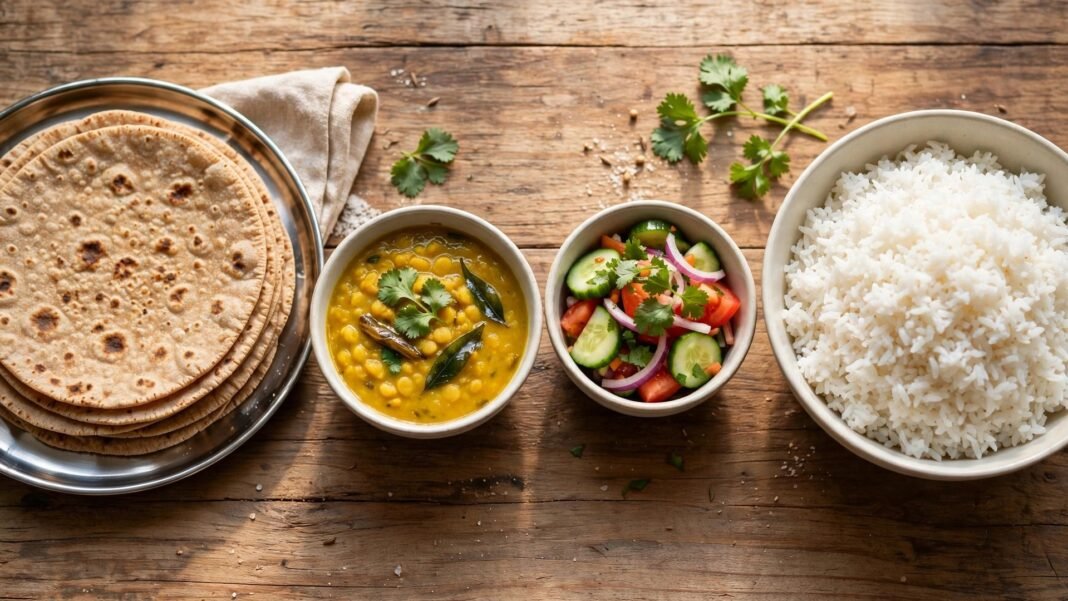
Here is the short answer to how long does cooked rice last in fridge: if you cooled it fast and refrigerated it properly, rice-specific safety guidance says eat it within 1 day. The 3 to 4 days you may have heard of applies to leftovers in general, not to rice.
That difference matters in India, where rice is cooked daily, kitchens stay warm for most of the year, and a pot often sits in the cooker for hours. This guide explains the two rules, the bacterium behind them, and clear decisions for common situations like overnight cooker rice and power cuts.
How Long Does Cooked Rice Last in Fridge? The Two Rules, Explained
US food-safety guidance, published at FoodSafety.gov, gives most refrigerated leftovers — cooked meat, soups and stews — a life of 3 to 4 days at 4°C (40°F) or below. Many Indian homes apply that same window to rice.
The UK’s NHS, which publishes a dedicated page on reheating rice, is stricter: keep cooked rice in the fridge for no more than 1 day before reheating it. Rice gets its own, shorter rule because of one bacterium, explained below.
Our advice: treat 1 day as the rule for rice, and 3 to 4 days as the outer limit for most other leftovers. And note that even the 1-day window assumes the rice was cooled quickly in the first place, and that your fridge is actually cold.
If you meal-prep rice for the week, the safe method is to freeze portions on the day of cooking rather than keep one large container in the fridge for four days.
Why Cooked Rice Is Riskier Than Other Leftovers
Uncooked rice commonly carries spores of Bacillus cereus, a bacterium that can cause food poisoning. Cooking kills the bacteria, but the spores can survive — including in a pressure cooker.
When cooked rice stands at room temperature, those spores germinate, multiply, and may produce toxins. One of them, cereulide, causes vomiting. The critical point is that this toxin is heat-stable: reheating, however thorough, does not destroy it.
So the danger is decided before the rice ever reaches the fridge. Rice that sat warm for hours can be unsafe even if it is later chilled and reheated until steaming. According to the NHS, symptoms usually start 1 to 5 hours after eating and last about 24 hours.
The 1-Hour Cooling Rule, and Why Indian Kitchens Need It
The NHS advises serving rice as soon as it has been cooked. If that is not possible, cool it as quickly as possible — ideally within 1 hour — and then refrigerate it.
US guidance gives perishable food 2 hours at room temperature, cut to 1 hour when the surroundings are above 32°C (90°F), as the FoodSafety.gov leftovers guide explains. Much of India crosses 32°C indoors for months, so the 1-hour rule is the realistic one for Indian homes.
Cool rice fast by spreading it in a wide, shallow container instead of leaving it in a deep pot, where the centre stays warm for hours. Store it covered, in shallow containers, and keep the fridge at 5°C or below; the US standard is 4°C (40°F).
Freezing is a valid pause button. Rice frozen promptly on the day of cooking keeps safely for months, though quality is best within a few months. Freezing stops bacteria multiplying but does not kill them, so thawed rice follows the same rules as fresh leftovers.
Rice Left in the Cooker Overnight: Safe or Not?
This is the most common rice habit in India, and the honest answer is this: if the cooker was switched off, or the rice merely stayed warm and slowly cooled, throw it out. Overnight warmth is exactly the condition in which Bacillus cereus multiplies.
A keep-warm mode only counts if the rice stayed genuinely hot — above 60°C — the entire time. That figure is the top of the bacterial danger zone, roughly 4°C to 60°C. Most home cookers cycle and cool unevenly, so do not rely on keep-warm; and even properly hot-held rice should be eaten, not stored again.
Decision rule: rice that spent the night in a switched-off or lukewarm cooker goes in the bin, however normal it smells. Harmful bacteria and their toxins cannot be seen, smelled or tasted.
Power Cuts and Warm Fridges
A fridge only protects rice while it stays cold. During a long power cut, a closed fridge warms up slowly. Once the inside has spent hours in the danger zone, treat the rice inside like rice left on the counter.
Decision rule: if a power cut lasted long enough that chilled food feels merely cool rather than properly cold, discard cooked rice instead of reheating it. When in doubt, throw it out — that is the official advice, and rice is cheap to remake.
Also check your fridge’s setting in summer. Many Indian fridges are set a few degrees too warm, and an overfilled fridge cools unevenly. Rice stored in a warm fridge does not get its full 1 day. The same cold, covered storage principle helps other kitchen staples too — see our guide to keeping coriander leaves fresh longer in the fridge.
Fried Rice, Biryani and Pulao: The Same Rules Apply
Mixed dishes do not get extra time. The clock starts when the rice was first cooked, and the strictest ingredient sets the limit. Egg fried rice, chicken biryani and vegetable pulao all follow the rice rule, not the longer meat-leftover rule.
This is also why fried rice is traditionally made from rice that was cooked, cooled quickly and chilled: cold, properly stored rice fries better, and it is the safe starting point. Biryani left in the handi at room temperature after a family function should be treated like any other room-temperature rice, and discarded.
Restaurant and takeaway rice is not exempt either. Get it into the fridge within the same 1-hour window once you are home, and reheat it only once.
How to Reheat Cooked Rice Safely
Reheat only rice that was cooled and chilled correctly. Knowing how long does cooked rice last in fridge is only half the safety picture — reheating has its own rules. Heat it until it is steaming hot all the way through — US guidance for leftovers is 74°C (165°F) — and stir midway in a microwave so no cold pockets remain.
Never reheat rice more than once, and throw away any reheated rice you do not finish. Reheating kills live bacteria; it cannot undo toxin formed earlier, which is why the storage steps matter more than the reheating steps.
The 5 Decision Rules, in One Place
So, how long does cooked rice last in fridge? One day, provided it was cooled within 1 hour and kept properly cold. These five rules sum it up:
- Cooked rice out at room temperature for over 2 hours — or over 1 hour in a hot kitchen: discard it.
- Cooled within 1 hour and refrigerated at 5°C or below: eat it within 1 day.
- Left in a switched-off cooker overnight: discard it, whatever it smells like.
- Reheat once only, until steaming hot throughout, then discard what is left.
- Any doubt about the time or temperature involved: throw it out.
Frequently Asked Questions
I left cooked rice in the cooker overnight. Can reheating make it safe?
No. If the cooker was off or the rice cooled slowly, bacteria had hours to grow and produce a heat-stable toxin that reheating cannot destroy. The rice may look and smell completely normal and still make you sick. Discard it.
Does freezing cooked rice make it last longer?
Yes. Freeze rice on the same day it is cooked, in flat portions, and it stays safe for months, though quality is best within a few months. Freezing stops bacteria multiplying but does not kill them, so thaw it in the fridge and follow the same reheat-once rule.
Can I reheat rice twice?
No. Reheat rice only once, until it is steaming hot all the way through, and discard whatever reheated rice is left over. Every cooling and reheating cycle adds more time in the temperature zone where bacteria grow.
What are the symptoms of food poisoning from rice?
Bacillus cereus poisoning typically causes vomiting or diarrhoea starting about 1 to 5 hours after eating, and symptoms usually last around 24 hours, according to the NHS. Because of this pattern, it is often mistaken for a stomach bug.
Is biryani or fried rice safer than plain rice because it is cooked again?
No. Frying or reheating does not destroy toxin that has already formed, and a mixed dish starts its clock when the rice was first cooked. Biryani, pulao and egg fried rice follow the same cooling, 1-day fridge and reheat-once rules as plain rice.