
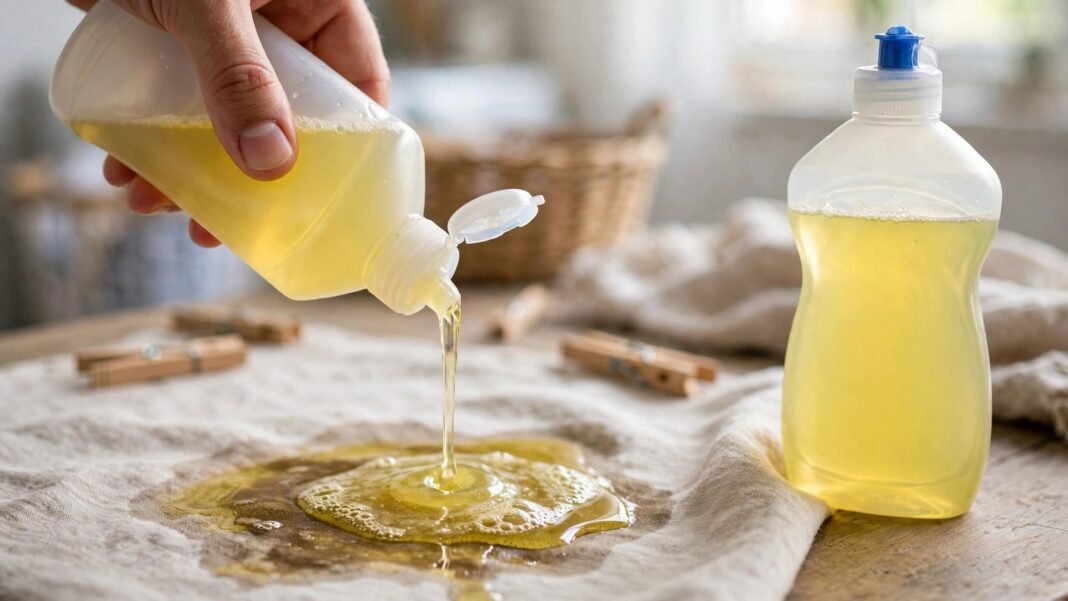
Finding dark oil stains after washed and dried clothes come out of the machine feels like the end of that garment. It is not. A stain that survived a full wash and a hot dryer cycle is harder to remove, but in most cases it can still be lifted.
The trick is to stop treating it like a fresh stain. Dried oil has to be made wet and workable again before any soap can carry it out of the fabric. This guide shows that reactivation method step by step, then the fabric-wise rules so you do not damage the cloth while saving it.
For a stain that has not been washed yet, use our guide to removing fresh oil stains from clothes instead. Everything below is only for stains that have already gone through a wash and a dry.
Why Oil Stains After Washed and Dried Are So Stubborn
Washing pushes oil deeper into the fibres, and the heat of drying bakes it in further. The oil also oxidises as it sits, which is why an old stain often looks darker than the original splash and feels almost part of the cloth.
Plain water and detergent struggle at this stage because the oil has hardened and bonded with the fibres. Rubbing harder does not help either; it spreads the stain and roughens the fabric. What works is chemistry, not force: dissolve the old oil first, then wash it out.
There is one more trap. A grease stain can look almost gone while the garment is wet, then reappear as it dries. Judge your results only on a fully dry garment, in daylight.
What You Need
You probably own everything required:
- WD-40 or a similar penetrating spray (for the reactivation step)
- Baking soda
- Liquid dish soap — the grease-cutting kind used for utensils
- An old soft toothbrush
- A piece of cardboard or an old towel
- An oxygen-based stain remover (optional, for washable whites and colourfast fabrics)
- Rubbing alcohol (optional, useful on synthetics)
Work in a ventilated spot, away from any flame, and test every product on a hidden seam first. If the colour lifts on the test patch, stop and take the garment to a dry cleaner instead.
Step-by-Step: Reactivate the Stain, Then Wash It Out
This is the main method for set-in stains on cotton, linen, denim and other sturdy fabrics.
- Protect the other side. Slip the cardboard inside the garment, behind the stain. Reactivated oil can soak straight through and mark the back layer.
- Reactivate the oil. Spray a light coat of WD-40 directly on the stain and wait 10 to 20 minutes. Its solvents dissolve the hardened grease and make it liquid again. It feels wrong to add an oily spray to an oil stain, but this is the step that makes the rest work.
- Draw the oil out. Cover the wet stain with a thick layer of baking soda and scrub gently with the toothbrush. The soda will clump as it absorbs oil. Brush it off and repeat with fresh soda until it stops clumping.
- Add dish soap. Work a few drops of dish soap into the stain with your fingers or the brush. Dish soap is made to cut kitchen grease, and it now has softened oil to work on. Leave it for 10 minutes.
- Wash as warm as the label allows. Wash the garment in the warmest water the care label permits, with your regular detergent.
- Air-dry and inspect. Never tumble-dry yet. Let the garment dry in air and check the stain in daylight. If a shadow remains, repeat the full method. A second round removes what the first loosened.
Each stage does a job the others cannot: the spray re-wets the stain, the soda absorbs the freed oil, and the soap’s surfactants surround what is left so the rinse water can carry it away.
The Gentler Dish Soap Method for Light Stains
If the stain is small, or the garment only went through one gentle wash, skip the spray. Rub dish soap and a paste of baking soda into the stain, wait 30 minutes, and wash in warm water.
An overnight soak in warm water with an oxygen-based stain remover also helps light stains on whites and colourfast cotton. Check the product label first: oxygen bleach is not meant for wool, silk or leather.
What to Use, and What to Avoid, for Each Fabric
Cotton, Linen and Denim
These are the most forgiving fabrics. The full reactivation method is safe, and warm water (as the label allows) helps, because heat keeps the oil liquid while the soap works on it.
Synthetics Like Polyester and Nylon
Synthetics repel water but hold on to oil, so stains can look faint yet refuse to leave. Dish soap works well, and rubbing alcohol dabbed on the back of the stain is another good option — a method Persil’s own stain guide also recommends. Avoid very hot water, which can damage synthetic fibres.
Silk, Wool and Delicates
Do not use WD-40, strong cleaners or scrubbing on silk and other delicates. Cover the stain with baking soda or cornstarch, leave it for several hours so the powder absorbs oil gently, brush it off, and repeat. If the garment matters to you, a dry cleaner is the safer answer.
Whites
On washable whites, an oxygen-based soak before the main method adds real power. Keep chlorine bleach away from grease stains: it does not dissolve oil, and it can yellow the fabric and weaken the fibres.
5 Mistakes That Make a Set-In Oil Stain Worse
- Tumble-drying before the stain is out. Every dryer cycle sets the stain deeper. Air-dry and inspect between treatments.
- Using chlorine bleach on grease. Bleach attacks colour and fabric, not oil, and can leave a worse mark than the stain.
- Skipping the patch test. Solvents can lift dye along with the stain on dark or delicate cloth.
- Rubbing hard. Aggressive rubbing spreads the oil sideways and roughens the fabric. Blot, and brush gently.
- Giving up after one wash. Set-in stains commonly need two or three rounds. That is normal, not failure.
What Results to Realistically Expect
Most cooking-oil stains on cotton come out fully within two treatments. Very old stains, and dark marks on synthetics, may only fade to a faint shadow even after three rounds. Plan for patience, not miracles.
The same setting problem happens with other greasy food stains that have been washed and dried, including turmeric-heavy ones. Our guide to removing curry stains from clothes covers that version of the fight.
Take the garment to a professional dry cleaner if it is dry-clean-only, if the stain covers a large area, or if two careful home treatments have made no difference. Cleaners use solvent-based degreasing that home methods cannot match.
Frequently Asked Questions
Why use WD-40 on an oil stain? Is it not oil itself?
WD-40 is mostly solvents, and those solvents dissolve hardened grease. You are not leaving it on the garment — it is washed out in the same cycle, carrying the original stain with it. Never use it on silk or delicates, and wash thoroughly before wearing.
How many times can I repeat the treatment?
Two to three rounds is typical for a set-in stain. Repeat as long as each round visibly lightens the mark. Always air-dry and check between rounds, and do not tumble-dry until the stain is completely gone.
Can I use bleach to remove a dried oil stain?
Not chlorine bleach. It does not dissolve oil, and it can yellow fabric and damage fibres. An oxygen-based stain remover is a better choice for washable whites and colourfast fabrics, and it should never be used on wool, silk or leather.
What is the best method for polyester and other synthetics?
Dish soap worked in well, or rubbing alcohol dabbed on the back of the stain, both work on synthetics. Use warm, not hot, water, and repeat rather than scrubbing harder, since synthetics hold oil tightly but are easily damaged by heat.
When should I give up and go to a dry cleaner?
If the garment is dry-clean-only, made of silk or another delicate fabric, or the stain has not improved after two careful treatments, professional solvent cleaning is the right call. Tell the cleaner it is an oil stain that has been washed and dried.