
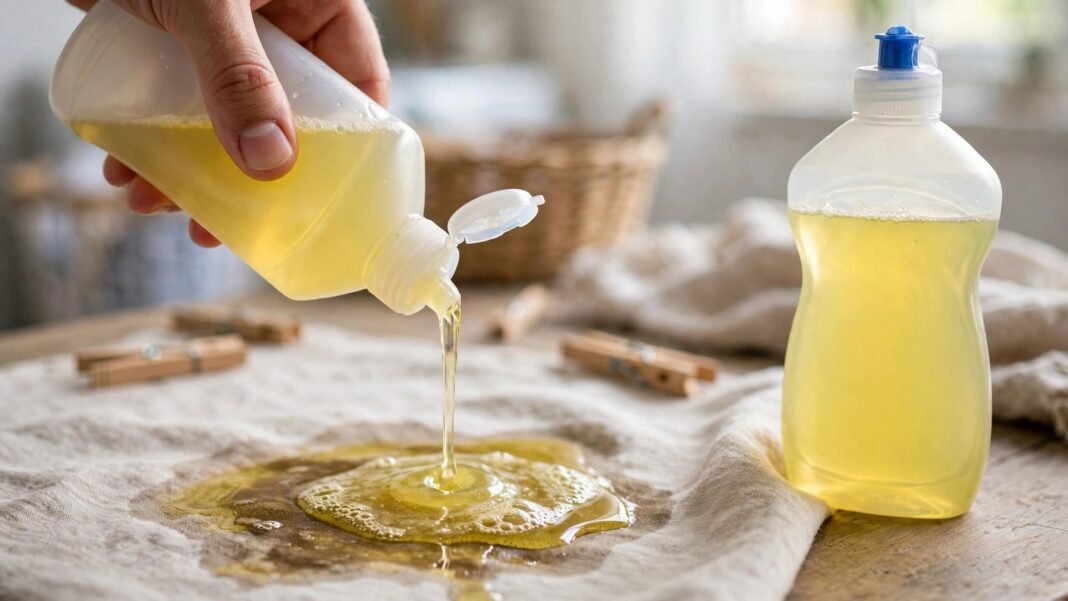
Indian cooking runs on oil — tadka splatter, ghee drips from parathas, mustard oil stains from pickles, and the mysterious grease spot that appears on your kurta after a wedding buffet. Knowing how to remove oil stains clothes in the Indian kitchen matters because our oils behave differently: ghee solidifies at room temperature, mustard oil carries strong pigments, and reused frying oil leaves darker, stickier marks than fresh oil. The good news is that grease stains are among the most fixable stains in laundry science, because one humble product — liquid dish soap — is chemically designed to do exactly this job.
This guide to remove oil stains clothes focuses on the dish-soap and hot-water method that works on kitchen grease and ghee stains, plus variations for every common scenario.
Why Dish Soap Beats Laundry Detergent on Grease
Laundry detergents are formulated mainly for water-soluble dirt — sweat, dust, food residues that dissolve in water. Oil does not dissolve in water, so detergent alone often just moves a grease stain around. Dish soap (Vim, Pril, or any liquid dishwash) contains surfactants engineered to break the surface tension of cooking oils and lift them off steel kadhais — and the same chemistry works on cotton fibres. The surfactant molecule has a water-loving head and an oil-loving tail: the tails burrow into the grease while the heads stay in the water, surrounding the oil in tiny spheres called micelles that rinse away freely.
That is the entire science of grease removal in one paragraph, and it explains why the method below works on everything from fresh tadka splatter to week-old ghee spots. One important note: this method uses hot water, which is correct for oil stains — the opposite of turmeric stains, where heat is forbidden. Different stain chemistry, different rules, which is why our turmeric stain guide starts with cold water instead.
Remove Oil Stains Clothes: Dish Soap + Hot Water Method
Use this as your default for any cooking-oil, ghee, or butter stain on washable fabric. Step one: blot, do not rub. Press a clean cloth or paper towel onto the stain to absorb surface oil; rubbing spreads it wider. If the stain is from solidified ghee, gently scrape off the solid layer with a spoon first. Step two: apply liquid dish soap directly to the stain — enough to cover it fully, about a teaspoon for a coin-sized spot. Work it into the fabric with your fingers or a soft toothbrush, going from the outside of the stain inward so it does not spread. Step three: let it sit for 15–20 minutes.
The surfactants need contact time to surround the oil molecules — this waiting period does most of the work when you remove oil stains clothes. Step four: rinse with the hottest water the fabric can safely handle. Check the garment’s wash-care label: cotton and most synthetics take hot water happily, but silk, wool, and some printed fabrics need only warm water. The heat melts residual oil and helps the micelles rinse away. Step five: inspect before drying. If any shadow remains, repeat the treatment — never put an oil-stained garment in the dryer or under a hot iron, because heat sets any remaining grease permanently. For most fresh kitchen stains, one round of this method removes the mark completely.
Indian Kitchen Variations: Ghee, Mustard Oil, Tadka, and Old Stains
- Ghee and butter stains: ghee solidifies below about 30°C, so a ghee spot often looks like a waxy lump first. Scrape off the solid, then treat with dish soap as above — the hot-water rinse is especially important here because it melts what scraping missed. Ghee stains rarely leave colour, so one treatment usually finishes the job.
- Mustard oil and pickle oil stains: these carry yellow-orange pigments from turmeric and chilli in the oil, so you are fighting grease plus colour. Do the dish-soap method first to remove the oil, then treat any remaining yellow shadow with the lemon-and-sunlight method from our turmeric stain guide.
- Tadka splatter (tiny dots across a kurta): treat each dot with a drop of dish soap rather than soaking the whole garment. A soft toothbrush works the soap into small spots precisely. Multiple tiny stains respond better to targeted treatment than to a full wash.
- Stains found after washing and drying: dried, heat-set grease is stubborn but not hopeless. Rub dish soap in, then layer baking soda over it to make a paste, leave for 30-60 minutes, and wash in the hottest safe water. The extended contact time compensates for the heat-setting. Repeat up to three times before giving up.
- Oil on silk, chiffon, or embroidered suits: skip the hot water and the toothbrush. Blot with dish soap diluted in lukewarm water, rinse gently, and air-dry. For expensive suits and sarees with zari work, take the garment to a dry cleaner and point out the stain — home treatment risks the embroidery.
- Chalk or talcum powder pre-treatment: for a fresh spill when you cannot wash immediately (at a wedding buffet, for instance), cover the stain thickly with talcum powder, chalk dust, or even atta from the kitchen. The powder absorbs surface oil over 15-30 minutes; brush it off and treat with dish soap when you get home. This one trick prevents most “it was fine yesterday” permanent stains.
Preventing Kitchen Oil Stains in the First Place
The cheapest stain remover is an apron — Indian kitchens produce more oil splatter than Western ones because of tadka, deep-frying, and high-heat tempering, so cooking in good clothes without an apron is asking for trouble. Keep a dedicated “cooking kurta” or apron by the stove. When deep-frying pakoras or puris, lower food gently into the oil instead of dropping it, which cuts splatter dramatically. Wipe the stove surround and your hands before touching clothes, because many “mystery” grease stains come from hands, not splashes.
And build the habit of treating stains the same day: a grease spot treated within hours needs one dish-soap round to remove oil stains clothes, while the same spot after a week in the laundry basket needs three. For other kitchen-origin stains, see our guides on tea stains on white clothes and dried curry stains.
Getting the Rancid Smell Out of Old Oil Stains
Sometimes the visible stain is gone but a faint rancid smell lingers — oxidised oil leaves odour even when the colour lifts. The fix is baking soda: after the dish-soap treatment, make a paste of baking soda and water, spread it over the area, and leave it for an hour before washing. Baking soda neutralises the volatile compounds that cause the sour smell.
For a whole load of kitchen-smelling clothes (aprons, cooking kurtas), add half a cup of baking soda to the wash drum and half a cup of white vinegar to the rinse cycle — the combination strips embedded grease odour from fibres. Finally, dry smelling garments in direct sunlight rather than indoors; UV and fresh air finish what chemistry starts. If the smell survives all of this, the oil has likely polymerised deep in the fibre, and the garment may be permanently scented — retire it to cooking-only duty.
Sources: surfactant and micelle chemistry per standard physical-chemistry references; fabric-care temperature guidance consistent with textile-care labels and university extension laundry publications; home-remedy methods to remove oil stains clothes are consistent with this guidance.
Frequently Asked Questions
Can old oil stains be removed?
Yes. Rub in dish soap, layer baking soda paste over it, leave 30-60 minutes, and wash in the hottest safe water. Repeat up to three times for heat-set stains.
How do you remove ghee stains from clothes?
Scrape off solidified ghee, apply dish soap, and rinse with hot water to melt the residue. Ghee rarely leaves colour, so one treatment usually works.
Does talcum powder help with oil stains?
Yes. Cover a fresh stain thickly with talcum powder or atta for 15-30 minutes to absorb surface oil before treating with dish soap at home.
Should I use hot or cold water on oil stains?
Hot, as hot as the fabric allows. Heat melts the oil and helps dish soap rinse it away. Cold water is for protein and turmeric stains, not grease.