
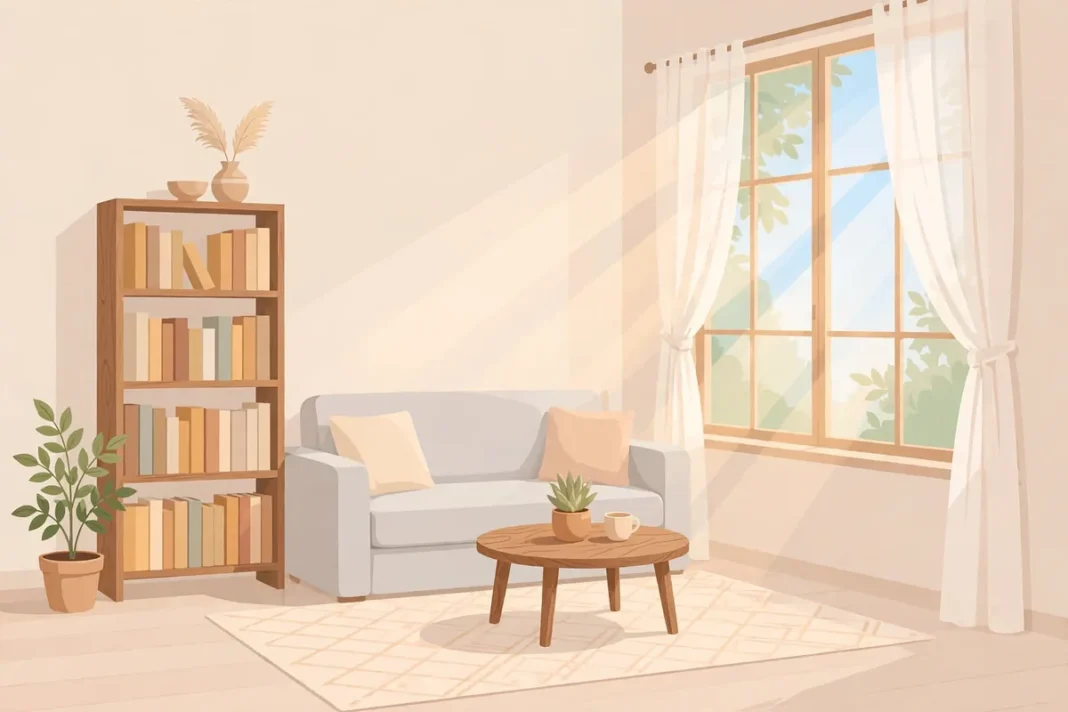
A small living room can still feel open, calm, and comfortable when every choice earns its place. The trick is not buying more furniture or knocking down walls. It is choosing the right layout, keeping colours light, and giving clutter nowhere to hide. These small living room ideas work in apartments, studios, and compact houses alike, and most of them cost little or nothing to try.
Start with what you already own before you buy anything new. Move the sofa, clear one surface, and open the curtains fully, then live with the change for a day before deciding what is missing. These small living room ideas follow that order, from layout and furniture to light and storage, so you can stop at whatever stage feels right. If you want the room to feel warmer as well as bigger, pair these with our cozy living room ideas for soft textures and warm light that suit small spaces.
Small Living Room Ideas: The 7 Ways
1. Plan the Layout Around One Focal Point
Every small room needs one clear focal point, such as a window, a fireplace, or the television wall. Point the sofa and chairs toward it, leave a walkway of about 30 inches, and resist the urge to push every piece of furniture against the walls. A sofa pulled a few inches out from the wall makes the room feel deeper, and it leaves space behind it for a slim console or a row of books. Sketch the layout on paper first, then move one piece at a time. If the front door opens straight into the room, an entryway setup can mark where the living area begins without adding a wall.
2. Choose Furniture That Fits the Room
Oversized furniture is the fastest way to shrink a small living room, so measure the room and the doorway before you shop. A two-seater sofa with slim arms and raised legs usually suits a compact room better than a bulky three-seater, because you can see floor beneath it and light passes around it. Look for low backs and armless chairs, which keep sightlines open and make the ceiling feel taller. Real homes featured by Apartment Therapy show how low-profile seating can make even a tiny room feel spacious, so study the proportions in these small living room ideas before you commit to a large piece.
3. Let Every Piece Do Two Jobs
In a small room, every piece of furniture should earn its floor space twice over. A storage ottoman works as a footrest, an extra seat, and a home for blankets and board games. A coffee table with a lower shelf or drawers hides remotes, chargers, and magazines that would otherwise crowd the surfaces. Nesting tables pull apart when guests arrive and tuck away when they leave. Even a bench by the window can hold books underneath and seat two people. Before buying anything new, check what you already own: a trunk, a sturdy basket, or an old chest can do the same job for free.
4. Keep Colours Light and Simple
Light colours reflect daylight and make walls feel further apart, so paint the room in one pale shade and carry it across the ceiling and trim. Warm white, pale grey, and soft beige all work well, and keeping the big pieces in the same family of tones stops the room from looking chopped up. That does not mean the room has to be boring. Add colour through cushions, a throw, or one piece of art that you can swap when you fancy a change. A tight palette also makes shopping easier, because anything new has to match what is already there.
5. Layer the Light and Hang a Mirror
One ceiling light leaves corners dark and makes a small room feel smaller, so aim for three light sources at different heights: daylight from the window, a floor or table lamp for evenings, and a small wall light or fairy lights for a soft glow. Keep curtains sheer or hang them high and wide so the whole window shows, and keep the sill clear. A mirror opposite the window bounces daylight across the room and doubles the view, which is why designers call it the cheapest way to add space. The Spruce recommends hanging mirrors to reflect natural light, and a plain mirror often costs under $50, far less than new furniture.
6. Store Up the Walls, Not Across the Floor
Floor space is precious in a small living room, so send storage upward. Tall, narrow shelves and wall-mounted cabinets use the empty space above eye level and leave the floor clear for walking and sitting. Keep the shelves tidy with baskets or boxes in one colour, and leave some breathing room between objects so the wall does not feel crowded. Hooks behind the door can hold bags and throws, while a slim floating shelf above the sofa displays a few favourite things without taking any floor at all. When everything has a place on the wall, the floor stays open and the room feels bigger.
7. Add One Cozy Corner and Stop There
These small living room ideas work best in a calm room, so finish with one cozy corner instead of filling every gap. A reading chair with a small lamp, a soft throw, and a stack of books gives the room a purpose and a place to slow down. Our guide to cozy reading nook ideas shows how to build one in a corner you already have, with pieces that cost little. Then stop. Leave one surface empty, one wall mostly bare, and room to move. The empty space is not wasted space: it is what lets the eye rest and makes the whole room feel larger than it is.
Frequently Asked Questions
What colour makes a small living room look bigger?
Pale, light-reflecting colours such as warm white, pale grey, and soft beige make walls feel further apart. Paint the walls, ceiling, and trim in one pale shade, then add colour through cushions, a throw, or art that is easy to swap, so the room stays bright without feeling plain.
How do I add storage to a small living room without clutter?
Use furniture that stores things, such as a storage ottoman or a coffee table with drawers, and send the rest upward with tall shelves and wall cabinets. Keep open shelves tidy with matching baskets, leave gaps between objects, and give every item a fixed home so surfaces stay clear.
Should I buy a sectional sofa for a small living room?
Usually not, unless the sectional is compact and fits the room with a clear walkway left over. A two-seater sofa with slim arms and raised legs, plus one light chair you can move, generally suits a small room better, because you can see floor beneath the pieces and rearrange them easily.
How can I make a small living room cozy without crowding it?
Choose one cozy corner, such as a reading chair with a lamp and a soft throw, and leave the rest of the room calm. Layer light at different heights, add texture with cushions and a rug, and keep one surface empty, because that breathing room is what makes the whole space feel larger.