
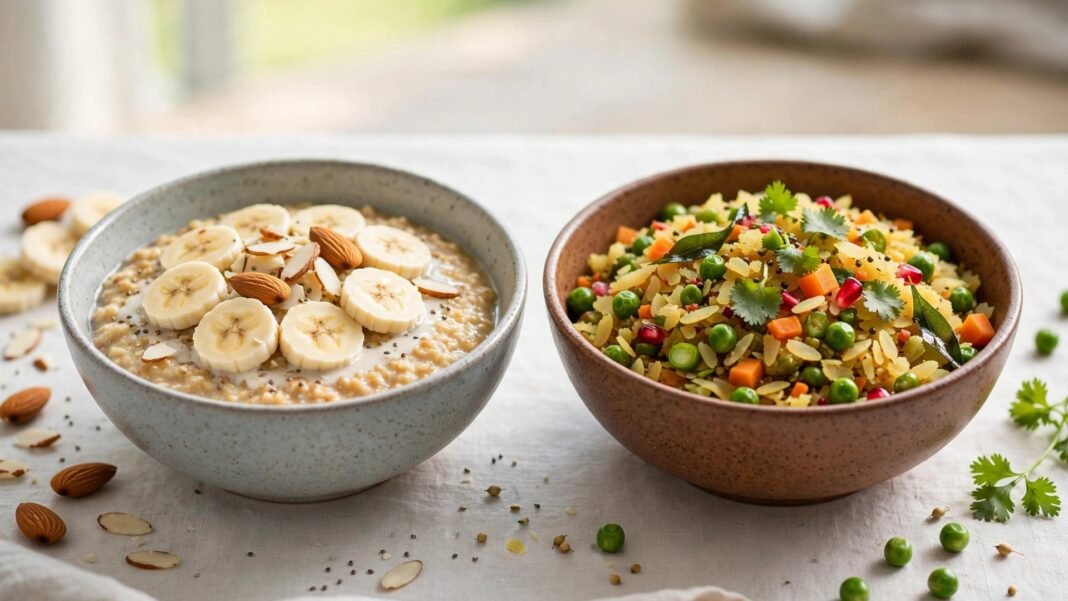
Breakfast decides how the rest of your day eats. A breakfast that keeps you full until lunch prevents the 11 am biscuit raid and the oversized lunch that follows. In India, the two most popular “healthy breakfast” contenders are oats and poha, and the oats vs poha weight loss debate is everywhere: fitness influencers swear by oats, while traditionalists defend poha as the lighter, more digestible choice. Both can support weight loss, but they work in very different ways. This guide compares their calories, fibre, and protein honestly, then gives you recipes that make each one genuinely weight-loss friendly.
Oats vs Poha: Nutrition Compared
Per 100 g of dry weight, rolled oats contain roughly 380 to 400 calories, 13 g of protein, 66 to 68 g of carbohydrates, and 10 to 11 g of fibre. Poha (flattened rice), per 100 g dry, contains roughly 350 to 360 calories, 6 to 7 g of protein, 77 g of carbohydrates, and barely 1 to 2 g of fibre. But dry-weight comparisons mislead, because nobody eats 100 g of dry oats or poha. A realistic serving is 40 to 50 g of dry oats (about 150 to 190 calories before milk and toppings) versus 50 to 60 g of dry poha (about 180 to 220 calories before oil, peanuts, and vegetables).
The real difference is fibre and satiety. Oats contain beta-glucan, a soluble fibre that forms a gel in the stomach, slows digestion, and is well documented to reduce cholesterol and prolong fullness. Poha’s fibre is minimal, so it digests faster and you feel hungry sooner, unless you deliberately add vegetables, peanuts, and protein to the dish. Oats also win clearly on protein: roughly double the protein of poha per serving.
Poha’s advantages are real too. It is lighter on the stomach and easier to digest, which matters for people with sensitive digestion or acidity. It is naturally rich in iron (from the processing of flattened rice), it cooks in 5 minutes with minimal oil, and it is deeply familiar comfort food, which means you will actually eat it consistently. A diet food you enjoy beats a superfood you abandon.
Oats vs Poha Weight Loss: Which Is Better?
If the only goal is staying full the longest on the fewest calories, oats win. The combination of high fibre and higher protein means a bowl of vegetable masala oats or overnight oats typically keeps people satisfied for 3 to 4 hours, versus 2 to 3 hours for plain poha. For weight loss, that extra hour of satiety is worth a lot: it is the difference between reaching lunch comfortably and snacking at 11:30.
But poha can absolutely work for weight loss if you build it right. The classic mistake is eating a big plate of plain poha cooked with a generous tadka of oil and peanuts, which can quietly reach 350 to 400 calories while leaving you hungry by mid-morning. The fix is to treat poha as a base, not a complete meal: load it with vegetables (peas, carrots, capsicum, onions), add a protein source (a bowl of curd on the side, or sprouts mixed in), and keep the oil to 1 teaspoon. Done this way, poha is a perfectly respectable 250 to 300 calorie breakfast.
The honest verdict: oats are the stronger weight-loss tool on paper, but the best breakfast is the one you will eat happily for months. Many successful dieters alternate: oats on some days, upgraded vegetable poha on others.
One practical strategy many nutritionists suggest is the 4-3 split: oats on the four weekdays when you need maximum staying power for long work hours, and poha on the three lighter days when you want comfort and easy digestion. This keeps breakfast interesting, which is the real secret to sticking with any eating plan beyond the first enthusiastic month. That consistency matters more than the winner of the oats vs poha weight loss debate itself.
Weight-Loss Oats Recipes
Masala vegetable oats (280 kcal): Dry-roast 40 g rolled oats. In 1 tsp oil, temper mustard seeds, curry leaves, chopped onion, carrot, peas, and capsicum. Add the oats, turmeric, salt, and 1.5 cups water. Simmer 5 minutes until creamy. Squeeze lemon on top. The vegetables add volume and fibre, so the bowl looks and feels big.
Overnight protein oats (320 kcal): Mix 40 g oats with 150 ml skimmed milk, 100 g curd, 1 tsp chia seeds, and chopped fruit in a jar. Refrigerate overnight. Top with 5 almonds in the morning. No cooking, high protein, and the chia adds omega-3s and extra fullness.
Weight-Loss Poha Recipes
Loaded vegetable poha (260 kcal): Rinse 50 g poha and drain. In 1 tsp oil, temper mustard seeds, curry leaves, peanuts (just 1 tbsp, not a handful), onion, peas, carrot, and capsicum. Toss in the poha with turmeric and salt, steam 2 minutes, finish with lemon and coriander. Serve with 100 g curd on the side for protein (adds 60 kcal and 3 g protein).
Sprouts poha (290 kcal): Replace half the poha with a cup of steamed moong sprouts. You get the familiar poha taste with double the protein and fibre for barely extra calories. See our sprouts benefits guide for three more chaat-style recipes.
Common Mistakes That Ruin Both Oats and Poha for Weight Loss
The grain is rarely the problem; the preparation is. The number one mistake with oats is turning them into dessert: instant flavoured sachets loaded with sugar, plus honey, plus banana, plus dry fruits can push a “healthy” bowl past 500 calories, at which point you would have been better off with parathas. If you like sweet oats, sweeten with half a banana or a few berries, not with three spoons of honey. Choose plain rolled oats over instant flavoured packets, which typically contain 10 to 15 g of added sugar per serving.
The number one mistake with poha is the oil-and-peanut creep. Traditional poha recipes are generous with both, and a heavy tadka plus a big handful of peanuts can add 150 to 200 calories to the base. Measure your oil with a spoon instead of pouring from the bottle, and count peanuts by the tablespoon. The second poha mistake is the missing protein. Plain poha with chai is a carbohydrate-only breakfast that spikes and crashes blood sugar, triggering hunger by 11 am. Always pair poha with curd, sprouts, or a boiled egg if you eat eggs.
A third mistake applies to both: portion blindness. Because both are soft and easy to eat, people serve themselves far more than they realise. Weigh your dry oats or poha for one week. Most people discover their “one bowl” is actually 80 g, nearly double the sensible serving. Once your eye is trained, you can stop weighing. Small measurement habits beat big diet overhauls every time.
For the bigger picture, compare staple choices in our roti vs rice guide, check roti calories by type, and build full days with our 7-day vegetarian weight loss diet plan.
For more comparisons, see the Times of India poha vs oats nutrition breakdown and Hello Fitness Magazine’s oats vs poha fitness analysis.
Sources: The Times of India food desk, Hello Fitness Magazine, USDA FoodData Central (oats and rice nutrition data).
Disclaimer: This article is for general informational purposes only and is not medical advice. Please consult a qualified healthcare professional before making changes to your diet, exercise, or treatment.
Frequently Asked Questions
How many calories are in a bowl of oats vs poha?
A realistic serving of plain cooked oats is 150 to 190 calories; plain poha is 180 to 220 calories. Toppings, oil, and milk change both numbers significantly.
Is instant masala oats healthy?
Plain rolled oats are the better choice. Flavoured instant sachets often pack 10 to 15 grams of added sugar per serving.
Can diabetics eat poha?
Poha has a higher glycemic index than oats, so diabetics should keep portions moderate, add vegetables and protein like curd or sprouts, and choose oats more often.
What should I add to poha to make it healthier?
Load it with peas, carrots, and capsicum, keep oil to one teaspoon, limit peanuts to a tablespoon, and serve with curd or sprouts for protein.