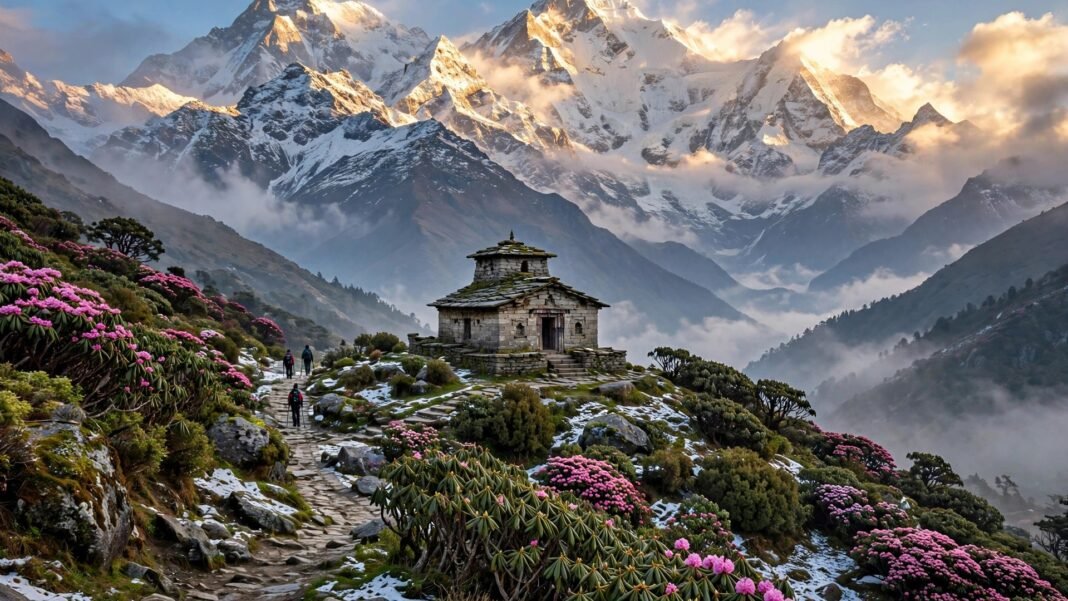
The Chopta Tungnath trek best time to visit question has three correct answers, because this trail reinvents itself every season: rhododendron forests in spring, crystal-clear Himalayan views in autumn, and a full snow trek in winter. Chopta — a meadow town in Uttarakhand’s Rudraprayag district often called Mini Switzerland — is the base for the trek to Tungnath (3,680 m, the highest Shiva temple in the world and one of the Panch Kedar) and on to Chandrashila summit (about 4,000 m) for a 360-degree panorama of Nanda Devi, Trishul, and Chaukhamba.
At just 3.5 km from Chopta to Tungnath plus 1.5 km to Chandrashila, it is one of India’s best beginner Himalayan treks and a classic Delhi weekend escape. This 2026 guide covers the best time season by season, the snow months, and a complete weekend itinerary.
Chopta Tungnath Trek Best Time to Visit: Season by Season
- March to June (spring/summer): The most popular window. March–April brings blooming rhododendrons that turn the forest trail red and pink; May–June offers pleasant 10–20°C days and comfortable trekking. The Tungnath temple typically reopens in late April or May after winter closure — check the opening dates before planning a temple-focused trip. Expect crowds on summer weekends.
- July to September (monsoon): The meadows turn lush green, but this is the weakest season for the trek — rain makes the stone-paved trail slippery, clouds hide the peaks, and landslides can disrupt the Rishikesh–Chopta road. Avoid unless you specifically want monsoon greenery and are flexible with plans.
- October to November (autumn): Arguably the finest trekking weather — crisp air, the clearest mountain views of the year, and thinning crowds. Daytime temperatures are pleasant, nights get cold (carry proper layers). The temple usually closes for winter in late October or November, with the deity ceremonially moved to Ukhimath/Makkumath.
- December to February (winter/snow): Chopta becomes a snow trek. The trail from Chopta is buried in snow, the landscape is pristine, and you get the Himalaya at its most dramatic — but this is a different trek requiring winter gear, an experienced guide, and fitness for snow walking. The temple remains closed; the reward is the snow, the silence, and Chandrashila’s winter panorama. Road access can be cut off after heavy snowfall, so keep buffer days.
The Trek: Chopta to Tungnath to Chandrashila
The trail is straightforward and well-marked: a paved stone path climbs 3.5 km from Chopta (2,680 m) through oak and rhododendron forest to Tungnath Temple (3,680 m), taking 2–3 hours at an easy pace. Tungnath, believed to be over a thousand years old, is the highest of the five Panch Kedar temples — even non-religious trekkers find the ancient stone complex, with the peaks looming behind it, deeply moving. From the temple, a steeper 1.5-km trail climbs to Chandrashila (about 4,000 m), taking another 45–60 minutes.
The summit’s 360-degree view takes in Nanda Devi, Trishul, Kedarnath Dome, and Chaukhamba — on a clear autumn or winter morning it is one of the great viewpoints in Uttarakhand. Most trekkers do Chopta–Tungnath–Chandrashila and back in 5–7 hours round trip. Difficulty is easy-to-moderate: the altitude is the main factor, not the terrain. Start by 6–7 AM to reach Chandrashila before clouds build, carry 2 litres of water (no reliable water source on the upper trail), and wear shoes with grip — the stone steps are slippery when wet or icy.
Weekend Itinerary from Delhi (2 Nights / 3 Days)
Day 0 (Friday night): Board the overnight bus or tempo traveller from Delhi (pickups are typically around Akshardham or South Delhi) — the drive to Chopta via Rishikesh, Devprayag, and Ukhimath takes 10–12 hours. Day 1: Arrive Chopta by morning, check into camps or guesthouses, rest, and spend the evening acclimatising with short walks around the meadows — do not rush into the trek the same day you arrive. Day 2: The big trek day — early start for Tungnath and Chandrashila, back in Chopta by afternoon, bonfire evening.
Day 3: Optional morning visit to Deoria Tal — a stunning high-altitude lake 3 km from Sari village (about an hour’s drive from Chopta) whose still waters mirror Chaukhamba peak — then begin the return drive, reaching Delhi late night. Organised weekend packages from Delhi typically cost ₹6,000–₹9,000 per person including transport, stays, and meals; a DIY trip with HRTC/UTC buses to Ukhimath or Guptkashi plus local taxis can be done for less but needs more planning. Verify current package inclusions — some exclude the Deoria Tal excursion.
How to Reach Chopta
Chopta has no railway station or airport; the road is the only way in. From Delhi (about 450 km), the standard route is Delhi – Haridwar/Rishikesh – Devprayag – Srinagar – Rudraprayag – Ukhimath – Chopta, taking 10–12 hours by road. Budget travellers can take an overnight bus or train to Haridwar/Rishikesh (trains from Delhi take 4–6 hours, sleeper fares from ₹200), then shared jeeps or UTC buses toward Ukhimath and Guptkashi, switching to a local taxi for the final climb to Chopta.
The nearest airports are Jolly Grant (Dehradun, about 220 km) and Delhi. The last 30–40 km from Ukhimath to Chopta is a narrow mountain road — beautiful but slow, so budget 1.5–2 hours for it. In winter, this stretch is the one most likely to close after heavy snow; check road status with your stay or driver before leaving Delhi in December–February. Fuel up at Rudraprayag or Ukhimath — there are no fuel stations at Chopta itself.
Costs, Packing and Practical Tips
Budget realistically: Delhi–Chopta return transport ₹2,000–₹3,500 (bus) or included in packages; stays in Chopta (Swiss camps and guesthouses) ₹800–₹2,000 per night; food ₹400–₹600 per day; guide/permits are usually bundled into packages (independent trekkers pay nominal forest entry fees). Total DIY: roughly ₹6,000–₹8,000 per person for the weekend. Pack for the season: spring/autumn needs a warm jacket, thermals for the night, and sun protection; winter demands heavy woollens, snow boots or crampon-compatible shoes, and gloves — temperatures drop well below freezing. Year-round essentials: headlamp, rain layer, water bottles, snacks, and a basic medical kit. Altitude note: Chopta sits at 2,680 m and Chandrashila near 4,000 m — ascend gradually, hydrate, and descend if you develop a persistent headache.
Mobile network is patchy beyond Ukhimath; BSNL works best.
Finally, respect the temple: it is an active shrine, so dress modestly, follow photography rules, and keep the trail clean — the meadows are fragile. If you are combining deities with trekking, note the Panch Kedar context: Tungnath is the third of the five sacred Shiva temples of Garhwal (after Kedarnath and Madhyamaheshwar), and many pilgrims pair it with a Kedarnath yatra in the May–June season — though that combination needs at least 5–6 days. For photographers, the money shot is Chandrashila at sunrise with the Chaukhamba massif turning gold; the Deoria Tal reflection shot works best on windless mornings before 8 AM. Carry a spare battery — cold drains phone and camera batteries fast at 3,500 m+.
More Himalayan weekends: our Spiti Valley route guide plans the bigger expedition, and the Kheerganga trek budget guide covers another classic beginner trek. Official information: Uttarakhand Tourism and Incredible India.
Sources: Uttarakhand Tourism, 2026 Chopta–Tungnath trek operator itineraries and seasonal reporting.
Frequently Asked Questions
Is the Chopta Tungnath trek difficult for beginners?
No — it is a beginner-friendly Himalayan trek: 3.5 km to Tungnath (2-3 hours) plus 1.5 km to Chandrashila on a well-marked stone path. Altitude, not terrain, is the main challenge.
When does Chopta get snow?
December to February, when the trail is buried in snow. It becomes a proper winter trek needing snow gear, an experienced guide, and buffer days — the temple stays closed but the snow landscapes are spectacular.
Can I do Chopta Tungnath in a weekend from Delhi?
Yes — a standard 2-night/3-day weekend works: Friday-night departure from Delhi, acclimatisation day in Chopta, the Tungnath-Chandrashila trek on day 2, optional Deoria Tal on day 3, and a late-night return.
How do I reach Chopta from Delhi?
About 450 km via Haridwar-Rishikesh-Devprayag-Ukhimath, taking 10-12 hours by road. There is no railway station or airport at Chopta; most travellers take an overnight bus from Delhi or train to Haridwar/Rishikesh plus shared jeeps onward.