
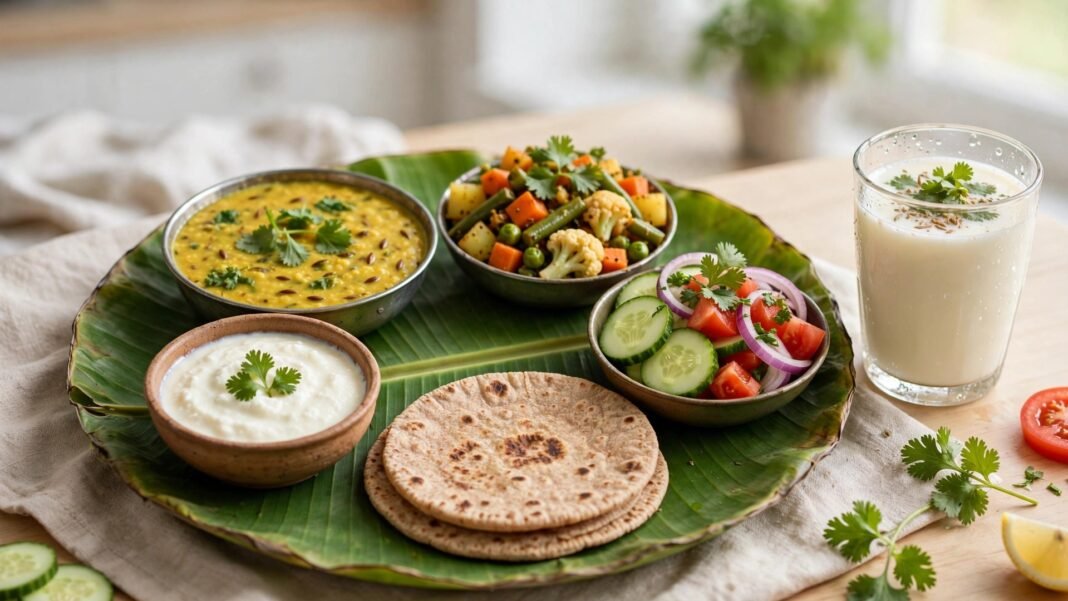
If you are a vegetarian in India and want to lose weight, you do not need a foreign diet of salads and quinoa bowls. A practical vegetarian weight loss diet plan India edition can be built entirely from the food you already cook at home: dal, roti, sabzi, curd, and rice. The reason most people fail at weight loss is not a lack of willpower. It is a plan that does not fit their kitchen, their budget, or their family.
Crash diets that cut out entire food groups may show quick results, but the weight almost always comes back. This guide gives you a realistic vegetarian weight loss diet plan India readers can follow: 7 days at around 1,400 to 1,600 calories per day, a level that supports steady, sustainable fat loss of about 0.5 kg per week for most adults when combined with daily activity.
Before we start, one honest note. No diet plan melts fat on its own. Weight loss happens when you consistently eat slightly fewer calories than you burn, and this vegetarian weight loss diet plan India guide is designed to create that small daily deficit without leaving you hungry or weak. Protein and fibre are deliberately high in every day of the plan, because both keep you full and protect your muscles while you lose fat.
Vegetarian Weight Loss Diet Plan India: How It Works
This vegetarian weight loss diet plan India readers follow is built on five simple principles. First, a daily target of roughly 1,500 calories for women and 1,600 to 1,800 for men, adjusted to your own size and activity. Second, protein at every meal: dal, paneer, tofu, curd, soy chunks, or sprouts appear daily, because a vegetarian Indian diet is often protein-poor and protein protects muscle during weight loss.
Third, fibre from vegetables, whole grains, and salads, which slows digestion and keeps blood sugar steady. Fourth, controlled portions of roti and rice: 2 small rotis or 1 katori of cooked rice per main meal, not 4 to 5. Fifth, minimal sugar, deep-fried snacks, and packaged foods. Tea and coffee are allowed, but count the milk and sugar honestly.
Drink 2.5 to 3 litres of water through the day, walk 30 to 45 minutes daily (our 10,000 steps walking plan pairs perfectly with this vegetarian weight loss diet plan India routine), and keep dinner light and at least 2 hours before bed. If you have diabetes, thyroid issues, or any medical condition, get your doctor’s or dietitian’s approval before starting.
Vegetarian Weight Loss Diet Plan India: 7-Day Meal Plan
Day 1 (~1,480 kcal): Breakfast: 2 vegetable besan chillas with mint chutney and 1 katori curd (350 kcal). Lunch: 2 phulkas, 1 katori moong dal, 1 katori lauki sabzi, and a big cucumber-tomato salad (480 kcal). Evening: 1 glass buttermilk and a small handful of roasted makhana (150 kcal). Dinner: 1 large bowl of vegetable soup with 50 g grilled paneer (380 kcal). Bedtime: 1 cup warm haldi milk, skimmed (120 kcal).
Day 2 (~1,520 kcal): Breakfast: 1 bowl vegetable poha with a few peanuts and lemon (330 kcal). Lunch: 1.5 bajra rotis, 1 katori chana masala, 1 katori bhindi sabzi, salad (470 kcal). Evening: 1 apple with 5 soaked almonds (150 kcal). Dinner: 1 katori moong dal khichdi with 1 tsp ghee and steamed vegetables (420 kcal). Bedtime: 1 cup chamomile or green tea (0 kcal) plus 1 small bowl curd if hungry (150 kcal).
Day 3 (~1,500 kcal): Breakfast: Oats upma with mixed vegetables (330 kcal). Lunch: 2 phulkas, 1 katori masoor dal, 1 katori tinda sabzi, onion salad (470 kcal). Evening: 1 glass coconut water and roasted chana, 30 g (150 kcal). Dinner: Stir-fried tofu (100 g) with broccoli, capsicum, and mushrooms in light soya-garlic sauce (400 kcal). Bedtime: 1 cup warm milk, skimmed (150 kcal).
Day 4 (~1,490 kcal): Breakfast: 3 small idlis with sambar and 1 tsp coconut chutney (320 kcal). Lunch: 1 katori brown rice, 1 katori rajma, mixed sabzi, and 1 katori curd (500 kcal). Evening: 1 orange and a handful of roasted peanuts, 20 g (160 kcal). Dinner: 2 moong dal chillas with paneer bhurji filling (360 kcal). Bedtime: 1 cup buttermilk (150 kcal).
Day 5 (~1,510 kcal): Breakfast: Vegetable dalia (broken wheat porridge) with a few walnuts (340 kcal). Lunch: 2 jowar rotis, 1 katori toor dal, 1 katori karela sabzi, salad (480 kcal). Evening: 1 apple with 5 soaked almonds (150 kcal). Dinner: 1 large bowl of sprouts chaat (moong + kala chana) with onion, tomato, and lemon, plus 1 katori curd (390 kcal). Bedtime: 1 cup green tea (150 kcal).
Day 6 (~1,500 kcal): Breakfast: 1 bowl ragi porridge with milk and 1 tsp jaggery (300 kcal). Lunch: 1 katori multigrain rotis, 1 katori black chana curry, palak sabzi, salad (480 kcal). Evening: Roasted makhana, 30 g, with herbal tea (150 kcal). Dinner: Paneer tikka (100 g) with grilled vegetables and mint chutney (420 kcal). Bedtime: 1 cup warm haldi milk, skimmed (150 kcal).
Day 7 (~1,470 kcal): Breakfast: 2 vegetable uttapams with sambar (350 kcal). Lunch: Light thali: 1 phulka, 1 katori dal, 1 katori mixed sabzi, big salad, 1 katori curd (470 kcal). Evening: 1 pear or guava with 5 almonds (150 kcal). Dinner: Clear vegetable soup with 100 g tofu and a small millet khichdi (350 kcal). Bedtime: 1 cup buttermilk (150 kcal).
Vegetarian Weight Loss Diet Plan India: Smart Swaps That Matter
The 7-day vegetarian weight loss diet plan India readers start with works, but long-term success comes from habits. Replace white rice with brown rice or millet khichdi a few times a week. Choose roti over rice when you tend to overeat rice, since roti portions are easier to control. Start lunch and dinner with a large salad or soup so you naturally eat less of the calorie-dense items. Use ghee in small, measured amounts (1 to 2 tsp a day) rather than free-pouring oil. Snack on sprouts chaat instead of biscuits or namkeen. And for breakfast, compare oats vs poha to pick the option that keeps you full longest.
Cooking method matters as much as the menu. A sabzi cooked in 2 tsp of oil has roughly 150 fewer calories than the same sabzi floating in 2 tbsp of oil. Steam, grill, air-fry, and pressure-cook more; deep-fry almost never. Keep a simple food diary for the first two weeks of this vegetarian weight loss diet plan India journey. Most people discover they were eating 300 to 500 hidden calories a day from chai sugar, fried snacks, and second helpings.
Vegetarian Weight Loss Diet Plan India: What to Expect and When
With this vegetarian weight loss diet plan India routine and 30 to 45 minutes of daily walking, a realistic result is 0.5 to 1 kg of weight loss per week in the first month, slowing slightly after that. The first week’s drop is often bigger because of water weight, so do not get discouraged if week two looks slower. Measure your waist along with your weight, since waist inches often shrink even when the scale pauses. If weight loss stalls for 3 weeks, check portion creep first, then consider adding strength training twice a week, because muscle burns more calories at rest.
For more on building sustainable Indian meal plans, see the nutrition guidance from Tata 1mg on rice vs roti choices and PharmEasy’s guide to walking 10,000 steps a day, which pairs well with this diet. Stick with this vegetarian weight loss diet plan India approach for at least four weeks before judging your results.
Sources: Tata 1mg health articles, PharmEasy health blog, Times of India nutrition desk.
Disclaimer: This article is for general informational purposes only and is not medical advice. Please consult a qualified healthcare professional before making changes to your diet, exercise, or treatment.
Frequently Asked Questions
Can I eat rice and roti while losing weight?
Yes. Keep portions controlled at 2 small rotis or 1 katori of rice per meal, always pair them with dal and vegetables, and both fit comfortably into a weight-loss diet.
How fast will I lose weight on this plan?
A realistic and sustainable rate is 0.5 to 1 kg per week in the first month. Faster drops are usually water weight and rarely stay off.
Do I need to give up chai and snacks?
No. Keep your chai but count the milk and sugar honestly, and swap fried snacks for roasted chana, makhana, or sprouts chaat.
Should I skip dinner to lose weight faster?
No, skipping dinner usually backfires into late-night bingeing. Eat a light, protein-rich dinner at least 2 hours before bed instead.