
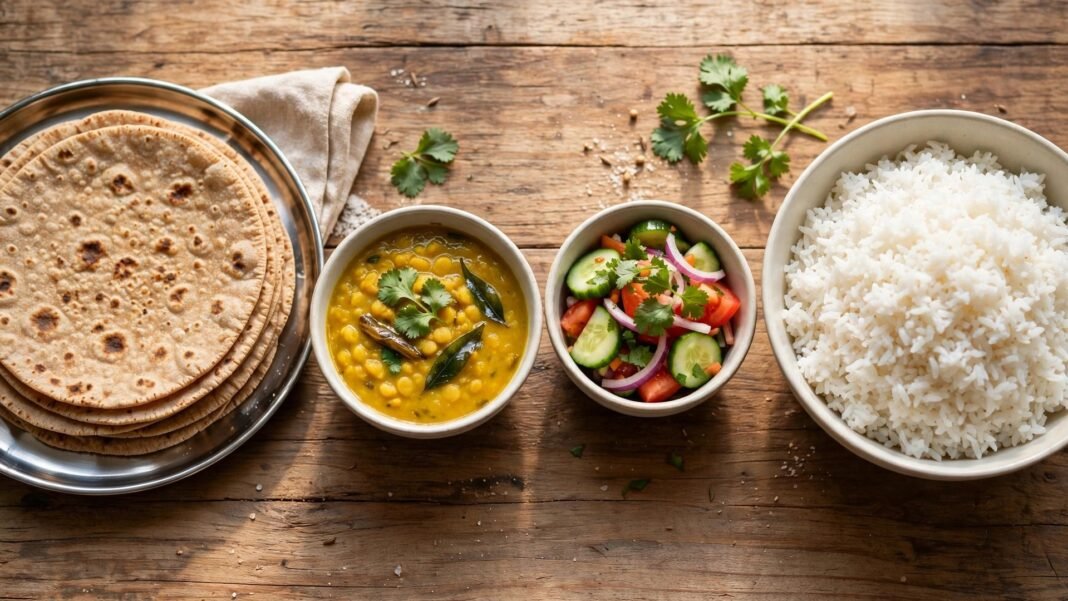
Every Indian dinner table hosts the same quiet debate: roti vs rice weight loss — which one helps you lose weight, and which one secretly adds kilos? You will hear confident opinions on both sides. Rice lovers say roti is heavy and bloating. Roti loyalists say rice is pure starch that spikes sugar. The truth, as usual, is more boring and more useful than either camp admits. Neither roti nor rice is inherently fattening. What matters is the type, the portion, and what you eat alongside it. This roti vs rice weight loss guide compares calories, fibre, and glycemic index honestly, so you can make the smarter choice for your own plate.
Roti vs Rice: The Numbers Side by Side
Let us start with facts. A medium whole wheat roti (about 35 to 40 g) contains roughly 100 to 112 calories, 3 to 4 g of protein, 20 to 22 g of carbohydrates, and 2.5 to 3.5 g of fibre. One katori (about 150 g) of cooked white rice contains roughly 190 to 205 calories, 4 g of protein, 42 to 45 g of carbohydrates, and barely 1 g of fibre. Per typical serving, rice delivers nearly double the calories of a single roti, with far less fibre. For a detailed breakdown, see our guide on how many calories are in 1 roti by type.
The glycemic index (GI) tells the blood sugar story. White rice has a high GI of around 70 to 73, meaning it digests fast and spikes blood sugar quickly. Whole wheat roti sits in the medium range at roughly 55 to 62, digesting slower and keeping you full longer. Brown rice (GI around 68) and basmati (GI around 58) sit between the two. For the roti vs rice weight loss question, fibre is roti’s biggest advantage: whole wheat flour retains its bran, while polished white rice loses almost all of its fibre in milling. India’s food regulator FSSAI runs the Eat Right India initiative with practical guidance on balanced everyday eating.
But here is the catch that roti fans ignore: nobody eats one roti. A typical dinner is 3 to 4 rotis (300 to 450 calories) versus one katori of rice (about 200 calories). Portion for portion, a modest bowl of rice can actually be lighter than a stack of rotis, which is why the roti vs rice weight loss debate cannot be settled on per-100-gram numbers alone. The food is not the problem; the quantity is.
Roti vs Rice Weight Loss: Which Is Better?
For most people trying to lose weight, whole wheat roti has a small but real edge. The higher fibre and protein keep you satisfied longer, the lower GI means steadier energy and fewer cravings an hour later, and rotis are easier to count: two rotis is a clear, visual portion, while rice portions creep up silently with every extra spoonful. If your rice meals tend to become two big katoris plus seconds, switching to a fixed number of rotis can cut 200 to 300 calories from dinner without any feeling of sacrifice.
Rice, however, has legitimate advantages. It is easier to digest, which matters if you have acidity or a sensitive stomach. It is naturally gluten-free. And culturally, for many South and East Indian families, a meal without rice does not feel like a meal at all, and a diet you hate is a diet you will quit. If you prefer rice, you can absolutely lose weight with it: stick to one measured katori, choose brown or hand-pounded rice when possible, and always pair it with dal and lots of sabzi, which lower the overall glycemic impact of the meal. If you want a structured plan around it, see our 7-day vegetarian weight loss diet plan for Indians.
The smartest answer to roti vs rice weight loss is therefore personal. If you can control roti portions easily, roti wins slightly. If rice keeps you happy and you measure it, rice works fine. What does not work is eating unlimited quantities of either while blaming the grain.
How to Eat Either One for Maximum Fat Loss
Whichever side of the roti vs rice weight loss debate you land on, these rules multiply the benefit. First, fix the portion before you sit down: 2 small rotis or 1 katori of cooked rice, decided in the kitchen, not at the table. Second, follow the plate method: half your plate vegetables and salad, one quarter protein (dal, paneer, soya, curd), one quarter roti or rice. Third, eat the fibre first. Starting with salad or soup measurably reduces how much of the starchy part you eat. Fourth, upgrade the grain when you can: multigrain or millet rotis (bajra, jowar, ragi) add fibre and nutrients over plain wheat, and brown or red rice beats polished white rice.
Fifth, watch the hidden calories that ride along. One teaspoon of ghee on each roti adds about 45 calories; three rotis with ghee carry 135 invisible calories. Fried rice, pulao made in lots of oil, and parathas shallow-fried in ghee can double the calories of the base grain. A plain phulka or a bowl of steamed rice is a completely different food from a ghee-laden paratha or a plate of fried rice, even though people count them the same.
Disclaimer: This roti vs rice weight loss article is for general informational purposes only and is not medical advice. Please consult a qualified healthcare professional before making changes to your diet, exercise, or treatment.
Frequently Asked Questions
Is roti better than rice for diabetes?
Whole wheat roti, with a GI of roughly 55 to 62, generally raises blood sugar more gently than white rice at 70 to 73. Portions and accompaniments matter more than the grain itself.
Can I eat rice every day and still lose weight?
Yes, if you stick to one measured katori per meal, prefer less-polished varieties when possible, and always pair rice with dal and plenty of vegetables.
Does ghee on roti make it fattening?
Each teaspoon of ghee adds about 45 calories. In measured amounts it is fine; unmeasured pouring is what quietly adds hundreds of extra calories to the meal.
Are millet rotis better than wheat rotis for weight loss?
Bajra, jowar, and ragi rotis offer more fibre and a lower glycemic impact than plain wheat rotis, making them slightly better for fullness and blood sugar control.